

Let’s Talk Travel Insurance For Bali: Everything You Need To Know
FINNS Holidays is all about holidays in Bali, and tens of thousands of people visit Bali every year without a single issue. In fact, many
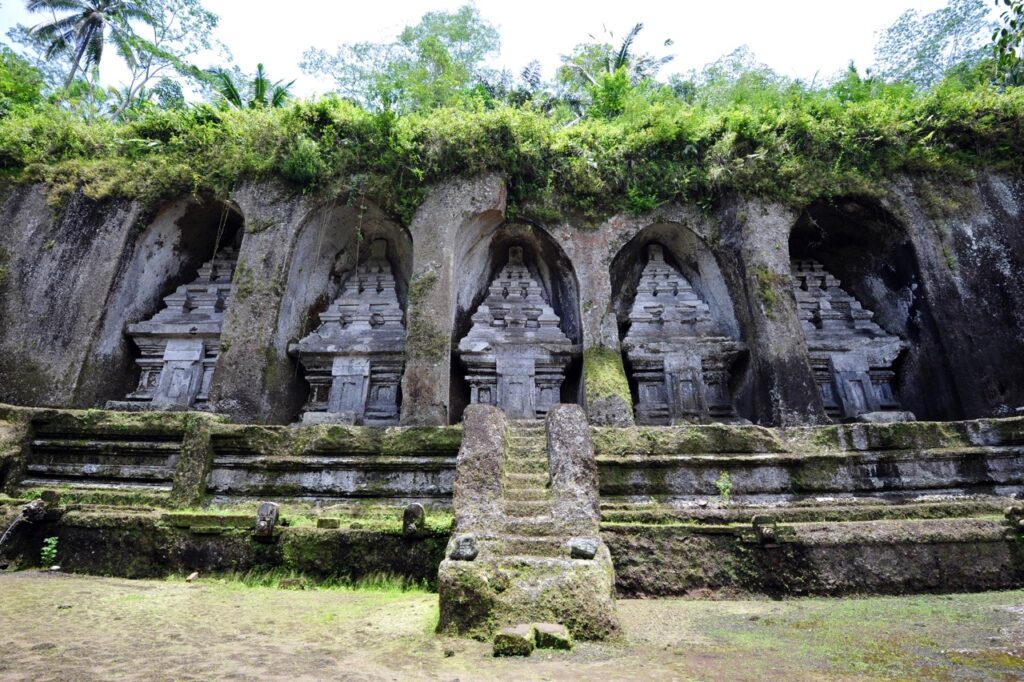
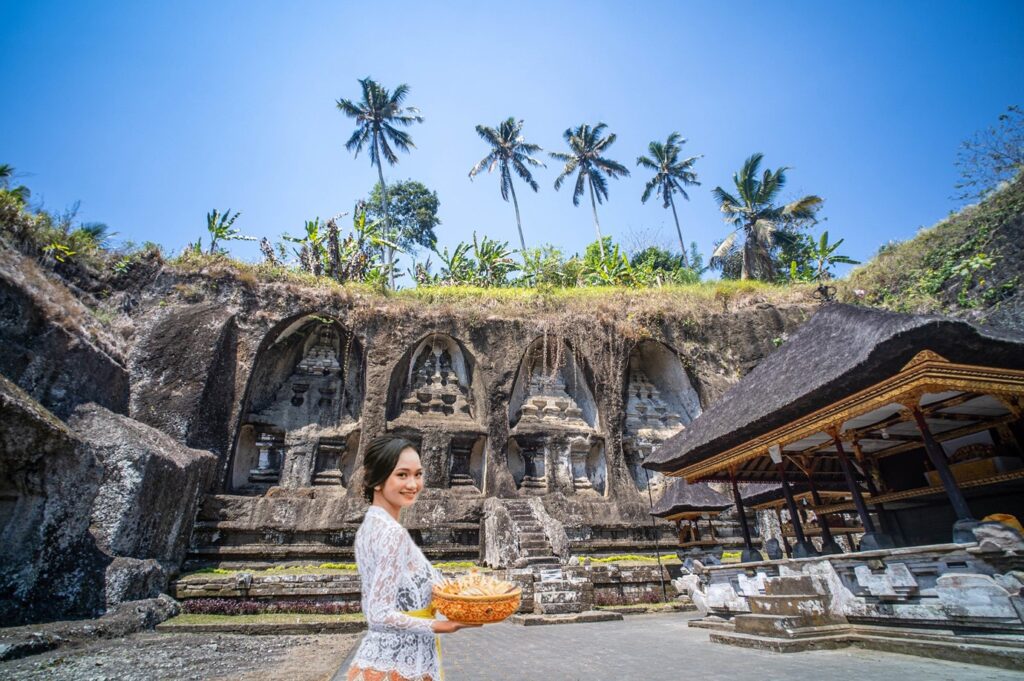
Gunung Kawi is an 11th-century funerary temple complex in central Bali, often referred to as Bali’s “Valley of the Kings”.
Known for its large shrines carved directly into the rock face, it’s tied to the island’s royal history, which is what really sets it apart from most other temples.
In this guide, we’ll run through what it’s actually like to visit and what makes it different once you’re down there.
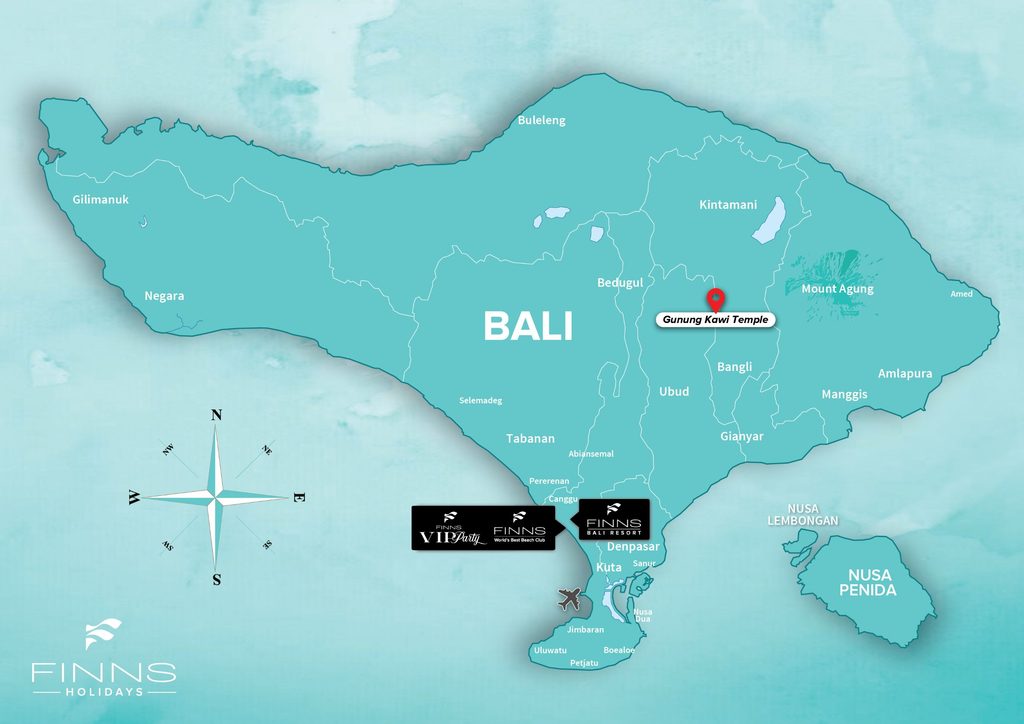
Gunung Kawi Temple Complex is located in Tampaksiring, in Gianyar Regency, around 20–30 minutes northeast of Ubud centre.
It sits down in a lush river valley running along the Pakerisan River, surrounded by rice terraces and small villages. You won’t see much from the road itself, as the temple grounds are hidden below and accessed via a long staircase.
Most people visit Gunung Kawi as part of a wider trip around the area, often combining it with nearby sites like Goa Gajah or Tirta Empul, which are both a short drive away.
Note: There is another similarly named temple about 4.5 km away called Gunung Kawi Sebatu; these two temples are not the same, but if you’re looking around the area, then it might be worth a quick visit.
Address: Jl. Gn. Kawi, Tampaksiring, Kec. Tampaksiring, Kabupaten Gianyar, Bali 80552, Indonesia

How to get to the temple complex depends on where you’re coming from and what your plans are after. It’s quite the spectacle, so people do go out of their way to see it, rather than just stop by.


Motorcycle or Scooter Hire – It may be tempting to hire a bike or scooter, the feeling of freedom as you ride through the hills with the wind rushing through your hair, and the choice to go wherever you choose. But, generally, we would recommend against it. It’s unlikely that you’ll have the correct license to ride, and you probably won’t be covered on your insurance. As well as this, the roads in Bali can be testing to say the least. Unless you’re very experienced and have the correct papers, give it a miss.
Yes, there is an entrance fee to visit Gunung Kawi Temple.
At the time of writing, tickets cost 50,000 IDR for adults and 25,000 IDR for children, which is pretty standard for a temple complex of this scale in Bali.
You’ll pay at the ticket booth near the entrance, before heading down the stone steps into the valley. Like most temples in Bali, you’ll also be given a sarong to wear if you’re not already dressed appropriately.
It’s a simple process, and the proceeds go towards the upkeep of the temple. Once you’re through, you’re free to explore the temple grounds at your own pace.
Gunung Kawi is open daily from 8 am to 6 pm, except during Nyepi, of course, when everything in Bali shuts down.
The best time to visit is early in the morning, not long after opening. It’s quieter, cooler, and you’ll avoid both the midday heat and the bigger tour groups that tend to arrive later on.
Late afternoon can also be a good time, especially if you don’t mind a bit more activity around the temple. The light softens a bit, and it’s generally a more relaxed feel compared to the middle of the day.
As for the best time of year, like most places out of the towns, the dry season is the easiest, with clearer skies and less chance of slippery steps or a sudden downpour. It can get busy, though.
The wet season is a bit of a different experience. The river valley is much greener, the rice terraces are full, and the whole place has a different feeling.
You’ll just need to watch your step on the way down and back up, as the stairs can get a bit slippery at times, and have your rain jacket ready for any sudden downpours.
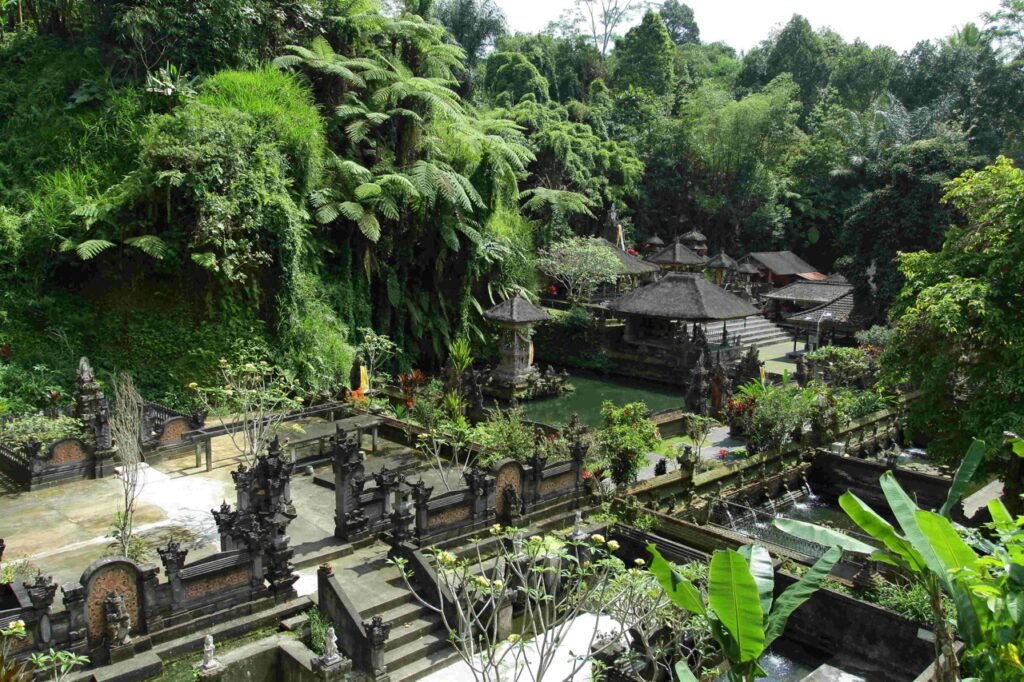
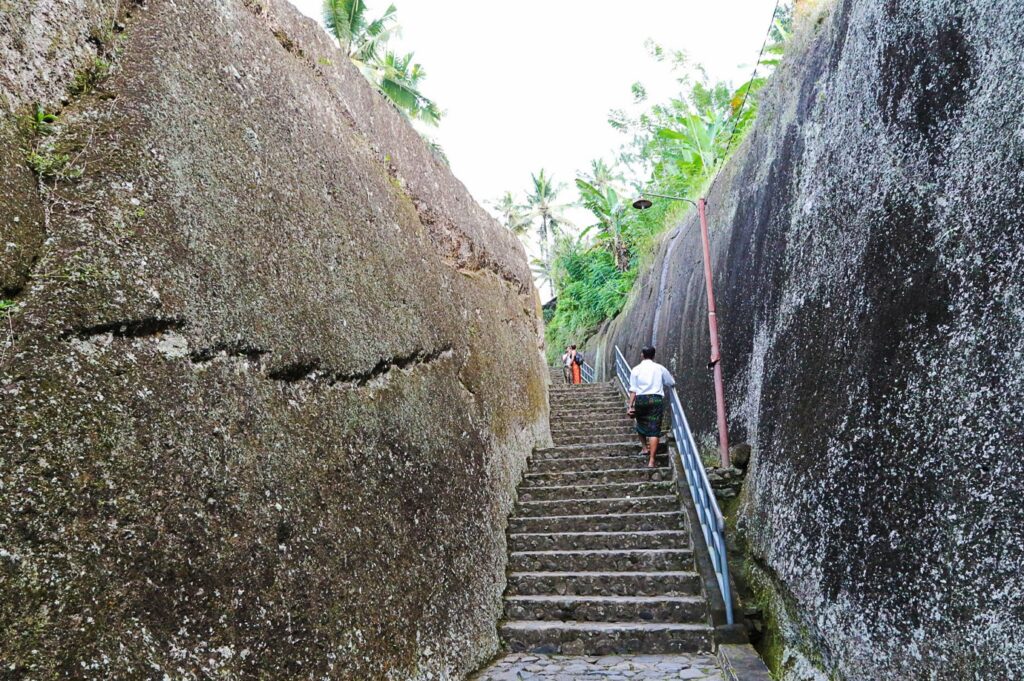
Once you arrive and pass the ticket booth, it starts with a walk down a long set of stone steps. On the way down, you’ll pass through terraced rice fields and small stalls, with the valley slowly opening up in front of you.


As you get further down, the setting becomes more obvious, as you’re surrounded by lush greenery, with the sound of the river running below, and it already feels quite different from most temple visits in Bali.
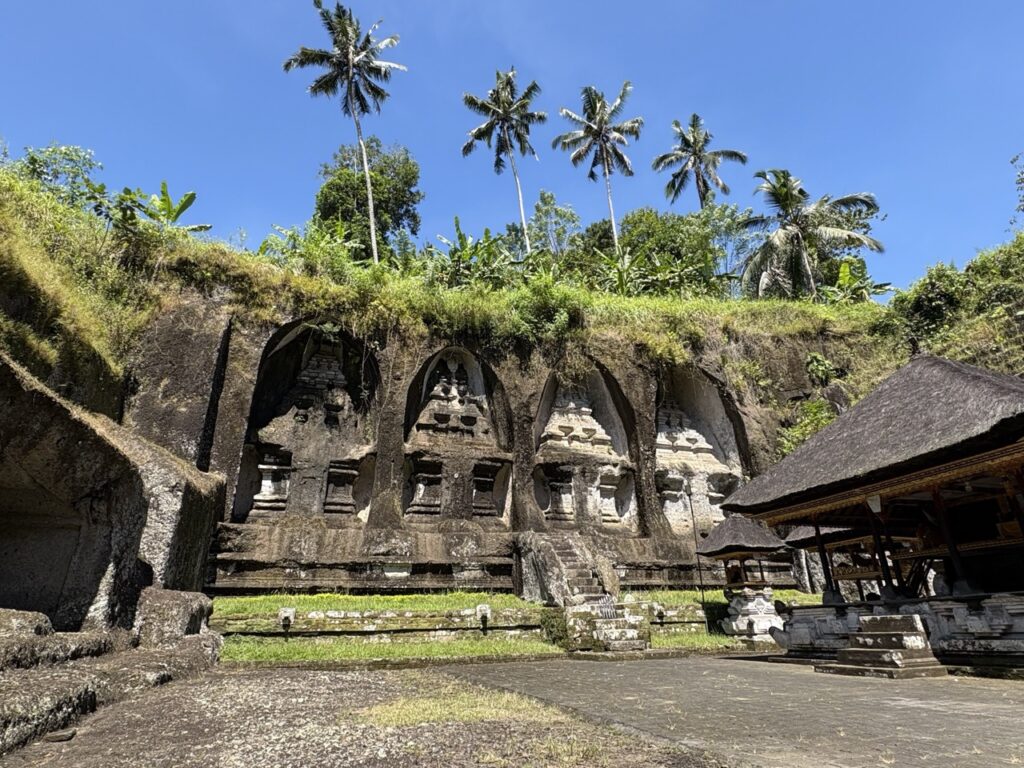
At the bottom, you’ll go through a stone archway with small pillars on each side, as the temple opens up across both sides of the river. The main highlight is the series of large shrines carved directly into the cliff face. These cliff-carved shrines are cut into the rock in tall niches, and they’re much bigger than most people expect when they first see them up close.
The layout is split, with shrines on the east side and west side of the river, so you’ll end up walking across and exploring both sides. There are smaller structures around the temple grounds, too, but the carved monuments are what stand out.
It’s not overly built up, which is part of the appeal. The whole place feels quite open, with a mix of ancient architecture and natural surroundings rather than a heavily developed temple complex.
Give yourself a bit of time to walk around properly, at least an hour, maybe two, taking in the mystical atmosphere. It’s not just a quick stop, and the setting is a big part of what makes it worth visiting.
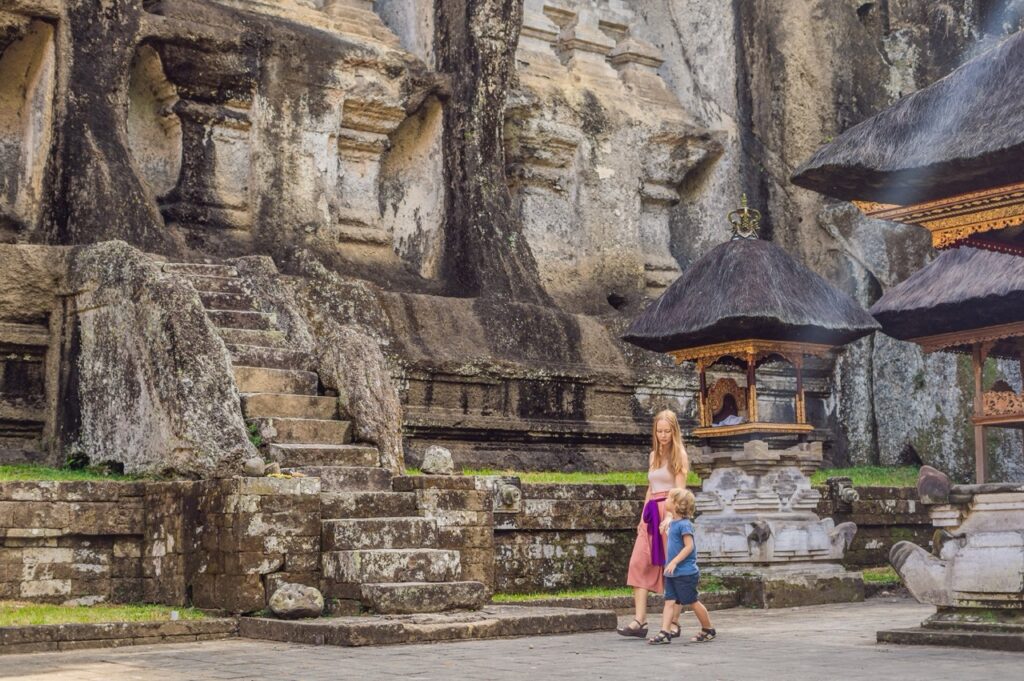
Gunung Kawi dates back to the 11th century, during the time of the Udayana dynasty, and is dedicated to King Anak Wungsu, the son of King Udayana. It’s widely believed that the complex was created as a funerary site for the royal family, which is what makes it different from most temples in Bali.
The large shrines carved into the cliff face are thought to represent members of the royalty. These monuments, with their intricate carvings, were not used as traditional tombs, and no remains were ever found inside. Because of that, they’re generally seen as symbolic rather than literal burial sites.
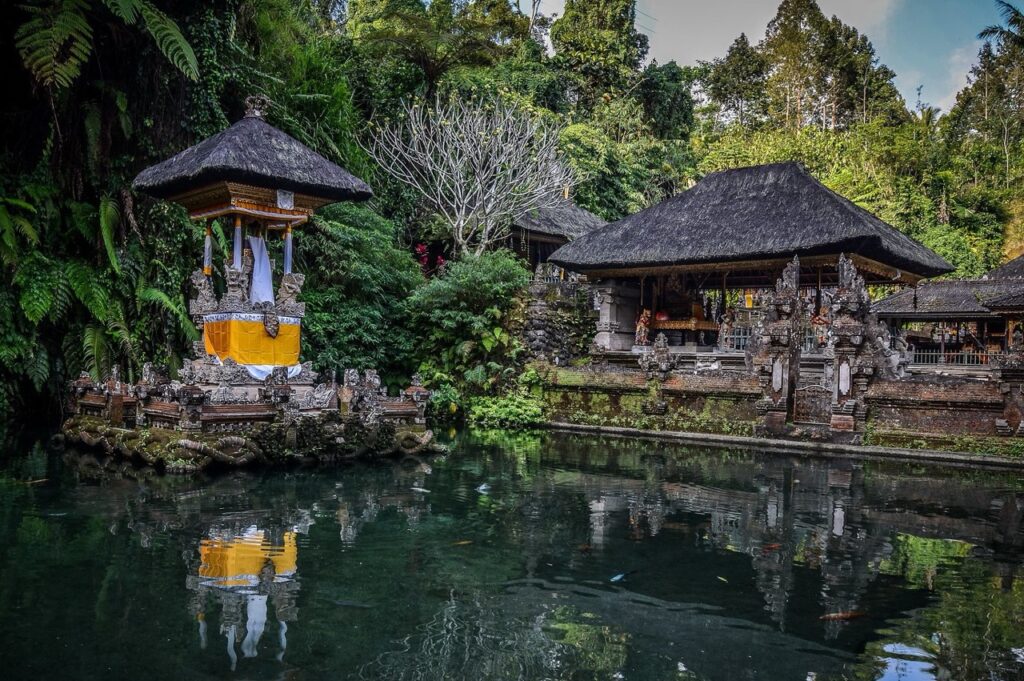
The site sits along the sacred Pakerisan River, in a lush river valley that would have held spiritual importance long before the shrines were carved. The river itself is still considered holy and an important part of Balinese history, and you’ll notice areas of holy water around the site today.
There are also a few smaller structures, including four shrines set slightly apart from the main group, along with smaller carved details and pillars that add to the overall feel of the place.


There’s still a bit of mystery around the exact layout and purpose of the complex, with some local stories and ancient legends linked to the site. That uncertainty, along with the setting and scale, is part of what gives Gunung Kawi its atmosphere and makes it one of Bali’s more unique historical sites.
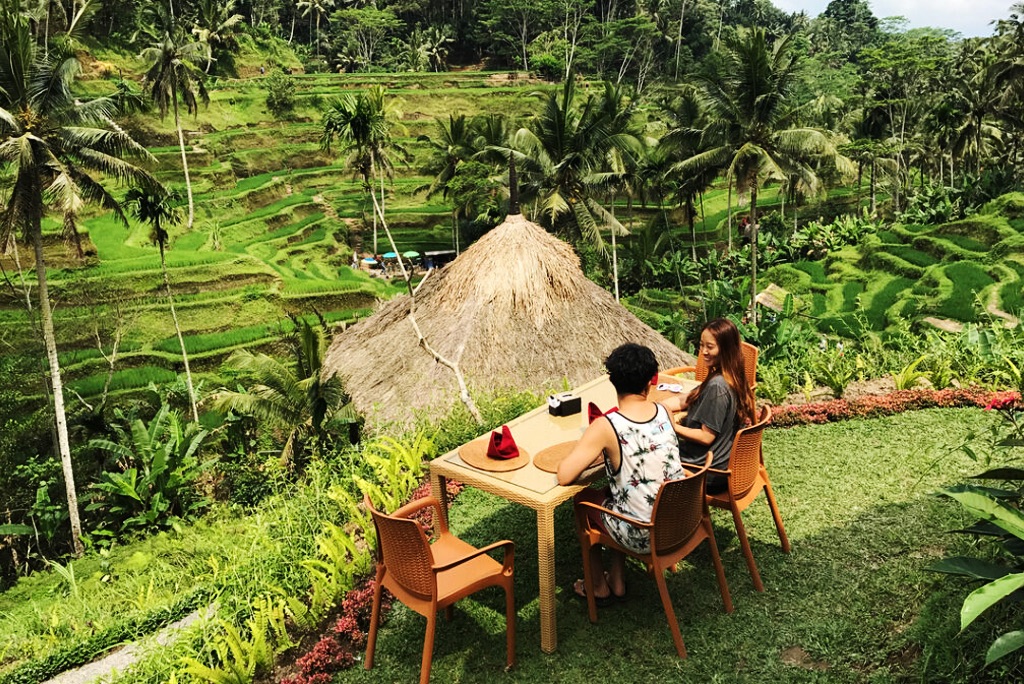
If you’re feeling peckish and can’t wait till you get home, then don’t worry, there are so many places nearby that we’d need to publish a separate piece to list them all! Here are a few we recommend, though:
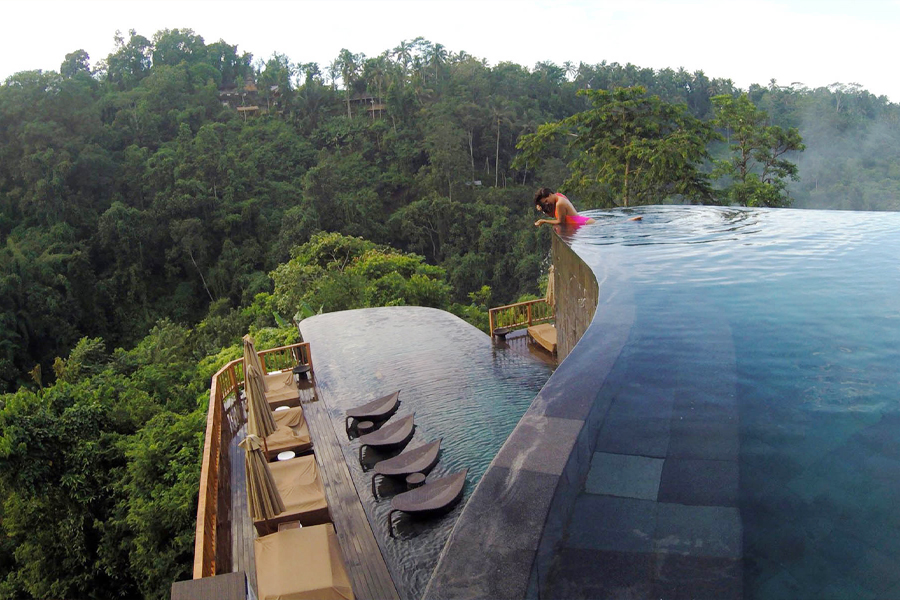
This is Ubud, and as such, there are endless places to stay. But if you want somewhere local without heading back into the town, here are a few places nearby:
If you’ve made the trip out this way, it’s worth sticking around for a bit. There are a few good spots nearby that are easy to add on without going out of your way.
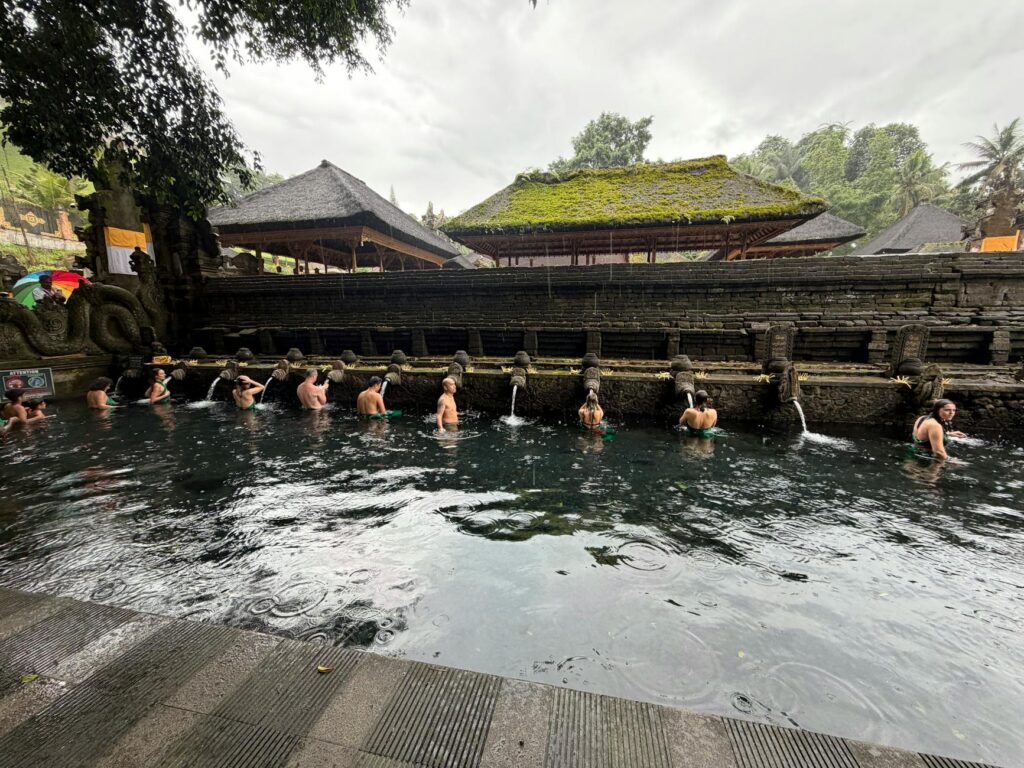
One of the more famous temples in Bali, Pura Tirta Empul, is known for its holy spring pools, where people take part in purification rituals. It does get busy, especially later in the day, but it’s worth seeing if you’re in the area. You can walk around the temple grounds and just take it all in, or get fully involved by joining in the water rituals.
A small temple built around a natural spring, overlooked by most tourists in the area, but worth checking out if you want to see something quieter with a more local feeling. People will be there praying, and they might be shocked to see you, so just treat the place with extra care and respect. A bit of a hidden gem if you’re fond of smaller temples.
A low-key but fun activity where you float down the river in an inflatable tube, passing through small rapids and jungle surroundings. It’s not as intense as white water rafting, but still a good laugh, and something a bit different to break up the temple visits.
Worth mentioning because of the similar name. This is a separate water temple, a bit east of Gunung Kawi, built around natural springs and pools.
The two are completely different, but like a lot of places in Bali, they often get mixed up in Google Maps reviews.
Besakih Temple is widely considered the oldest and most important temple complex in Bali, often referred to as the “Mother Temple”.
There isn’t one clear answer beyond that, as a lot of temples on the island date back to similar periods. Gunung Kawi isn’t the oldest, but it’s still one of the older temples, dating back to the 11th century and linked to the Udayana dynasty.
Yes, it’s a great place to visit in the wet season, and in some ways it’s actually better. The river valley is greener, the rice terraces are full, and the whole area has a different feel to it.
The only thing to keep in mind is the walk. The stairs can get slippery, and sudden downpours aren’t unusual, so it’s worth taking your time and bringing a rain jacket.
Gunung Kawi is one of those places that stands out once you’re there, not just another temple. The setting, the layout, and the shrines carved into the rock all give it a different kind of presence.
It’s a place that’s worth taking your time with. There’s a bit more to it than just turning up, having a quick look, and moving on.
If you’re exploring this part of Bali, it’s an easy one to add to your plans, and one that feels a bit more unique than most.
FINNS Holidays is all about holidays in Bali, and tens of thousands of people visit Bali every year without a single issue. In fact, many
Planning a short Bali itinerary? 5 days may not seem like a lot, but there’s plenty of time to enjoy the beaches of Canggu, temples of Ubud and more.

Looking for the best breakfast Bali has to offer? Discover 24 top cafes for everything from smoothie bowls and coffee to big breakfasts and brunch.

Worried about tomcats? Bali has them, but our guide to understanding these rove beetles covers their toxin, burns, treatment and how to avoid them.
Pay Safely With Us