

Let’s Talk Travel Insurance For Bali: Everything You Need To Know
FINNS Holidays is all about holidays in Bali, and tens of thousands of people visit Bali every year without a single issue. In fact, many
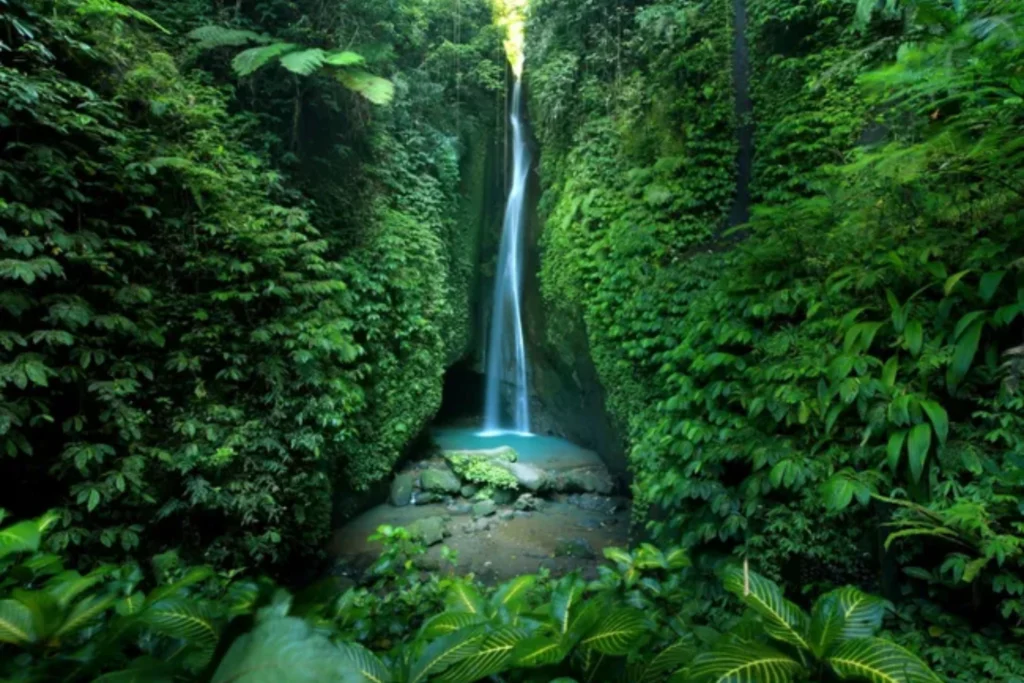
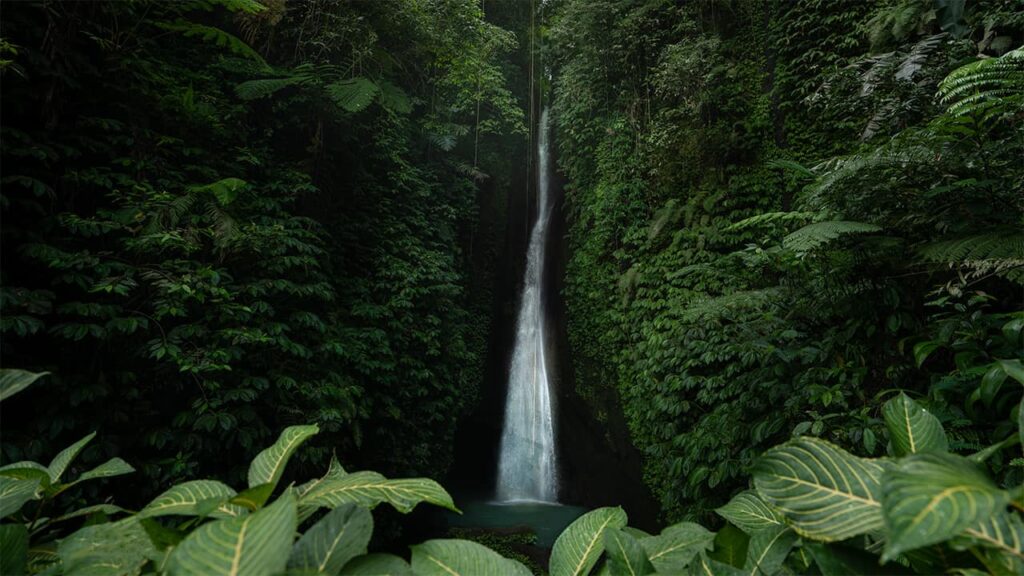
Southeast Asia has no shortage of amazing waterfalls, but Leke Leke Waterfall in Bali is easily one of the most enjoyable to visit. A single stream of rushing water drops through a narrow opening in the jungle, surrounded by steep cliffs, tropical greenery and moss-covered rocks.
It’s become considerably better known in recent years, so calling it a completely hidden gem might be stretching things. However, compared with some of Bali’s most famous waterfalls, Leke Leke still feels wonderfully removed from the island’s biggest tourist traps.
Whether you’re visiting Bali for the first time or exploring Bali beyond the usual locations, here’s everything you need to know before visiting Leke Leke Waterfall.
Leke Leke Waterfall is located in Mekarsari village, in the Baturiti area of Tabanan Regency, in the highlands between Central Bali and North Bali. Its inland location puts it within easy reach of several other popular attractions, making it a great addition to a day exploring this greener, cooler side of the island.
It’s around an hour’s drive from Ubud and considerably further from the main tourist areas of southern Bali, depending on traffic. If you’re using Google Maps, search for Leke Leke Waterfall and follow directions to the main parking lot and entrance.
Address: Mekarsari, Baturiti, Tabanan Regency, Bali 82191, Indonesia

Leke Leke Waterfall is a little out of the way, so the best way to get there depends on where you’re travelling from, who you’re with and what else you want to see. Are you planning a simple day trip, staying overnight in the area, or combining the waterfall with a few other stops?
Either way, here are the easiest options:


Leke Leke is really too far out to rely on Grab or Gojek, particularly as you may struggle to find a ride back. And however tempting hiring a motorbike or scooter may sound, remember that you may not be legally licensed to ride one, your travel insurance could be invalid, and Bali’s roads can be dangerous even for experienced riders.
The dry season, from around April to October, is generally the easiest time to visit Leke Leke Waterfall. The walking trail is usually drier and safer underfoot, while the pool beneath the falls is more inviting for a swim.
Visiting during the wet season has its advantages too. The waterfall is at its most powerful, the surrounding jungle is incredibly lush, and there are often fewer visitors. The thicker canopy also provides plenty of shade. However, expect slippery trails and muddy sections, while heavy rain can turn the pool brown and make the current too strong for safe swimming.
Whatever the season, early morning is the best time to arrive. You’ll beat most of the day tours, enjoy cooler temperatures and have a better chance of seeing Leke Leke before it gets busy. Arriving close to opening time also gives you plenty of time to continue exploring the surrounding area afterwards.
Opening Times: Open from 7:00 AM to 6:00 PM every day except Nyepi.
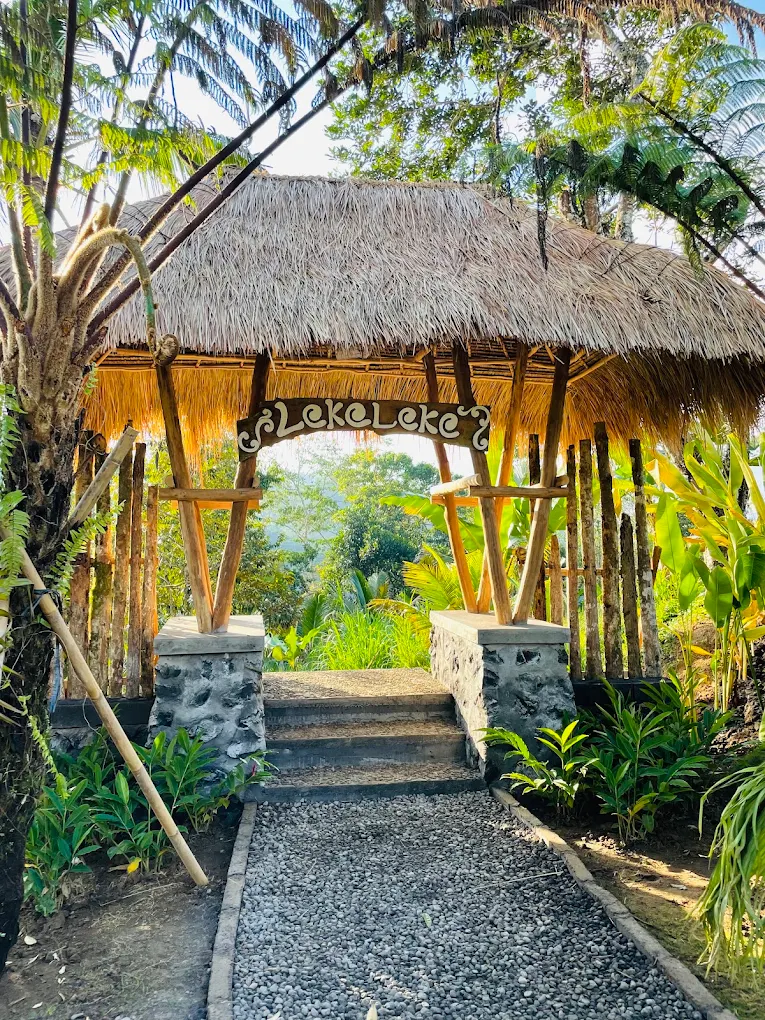
Yes. The entrance fee for Leke Leke Waterfall is currently 50,000 IDR per person, payable at the ticket office during opening hours.
There are a few optional activities available at an extra cost. The Leke Leke Swing, a large rope swing overlooking the surrounding greenery, costs around 250,000 IDR per person and is not included in your waterfall entrance ticket.


When you arrive at Leke Leke Waterfall, you’ll find a parking area beside the ticket office where you can leave your car or scooter before heading down.
Once you’ve paid the entrance fee at the ticket booth, the trail begins with steps leading past a small warung selling drinks and snacks, with views across the surrounding rice fields and jungle. From here, the walk continues towards the waterfall, with a few interesting stops along the way.
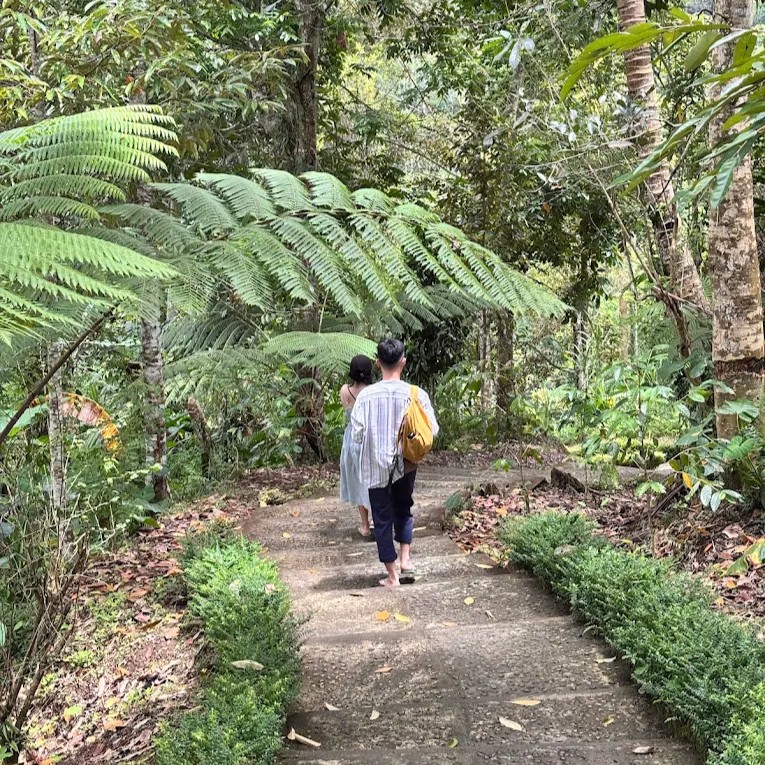
The walk from the entrance to Leke Leke Waterfall takes around 10–15 minutes each way, following a well-maintained path and a series of steps through thick tropical jungle.
It isn’t a particularly long hike, but there are some steep sections, and the trail can become slippery after rain. Bring decent footwear rather than just flip-flops, take your time and enjoy the surrounding plants and scenery along the way.
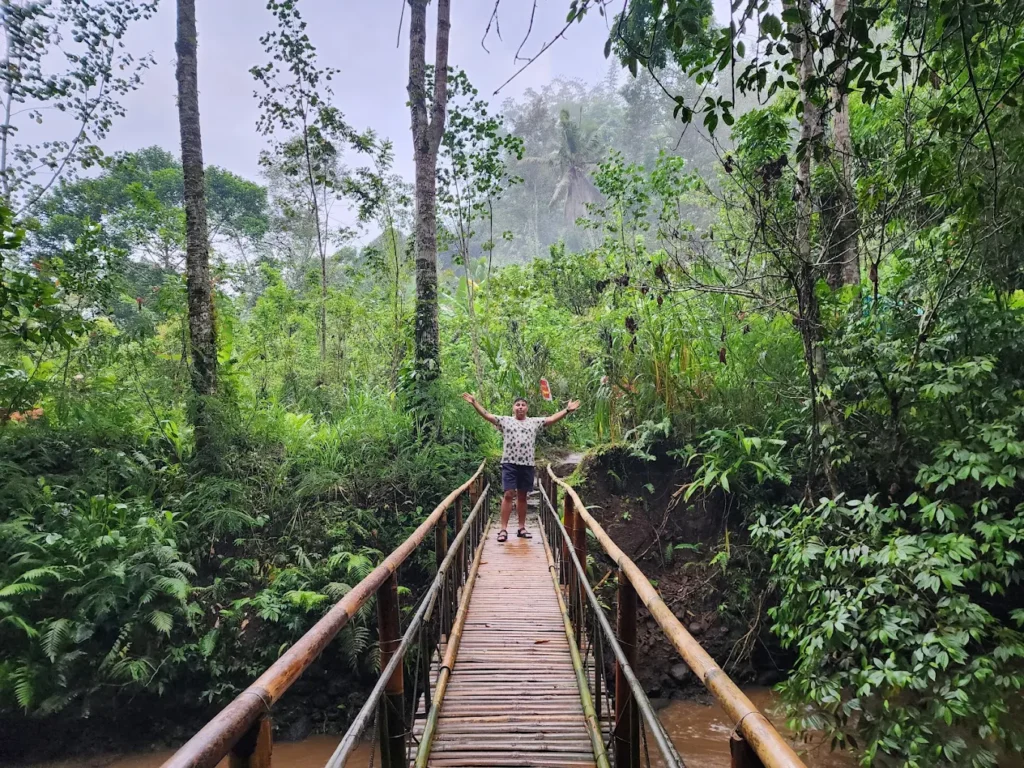
One of the highlights of the trail is the bamboo bridge crossing the stream on the way to the waterfall. Surrounded by dense jungle with rushing water below, it’s one of the most picturesque spots along the walk and a natural place to stop for a photo.
The bridge is sturdy, but the surface can become slippery when wet, so use the handrails and take care as you cross.
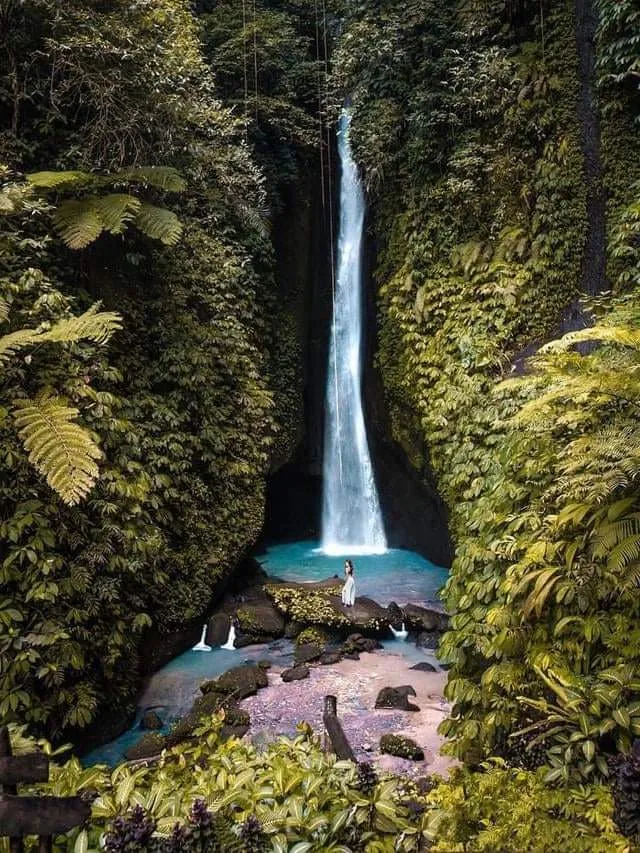
The natural pool beneath Leke Leke Waterfall is a beautiful place for a pleasant and refreshing swim, with shallower water around the edges and the cascade dropping into the pool in front of you. Conditions can change after heavy rain, particularly during the wet season, so use your judgement before getting in.
There are changing rooms near the falls, along with somewhere to leave your belongings. Storage isn’t secure, however, so keep valuables with you or leave them with someone you trust.
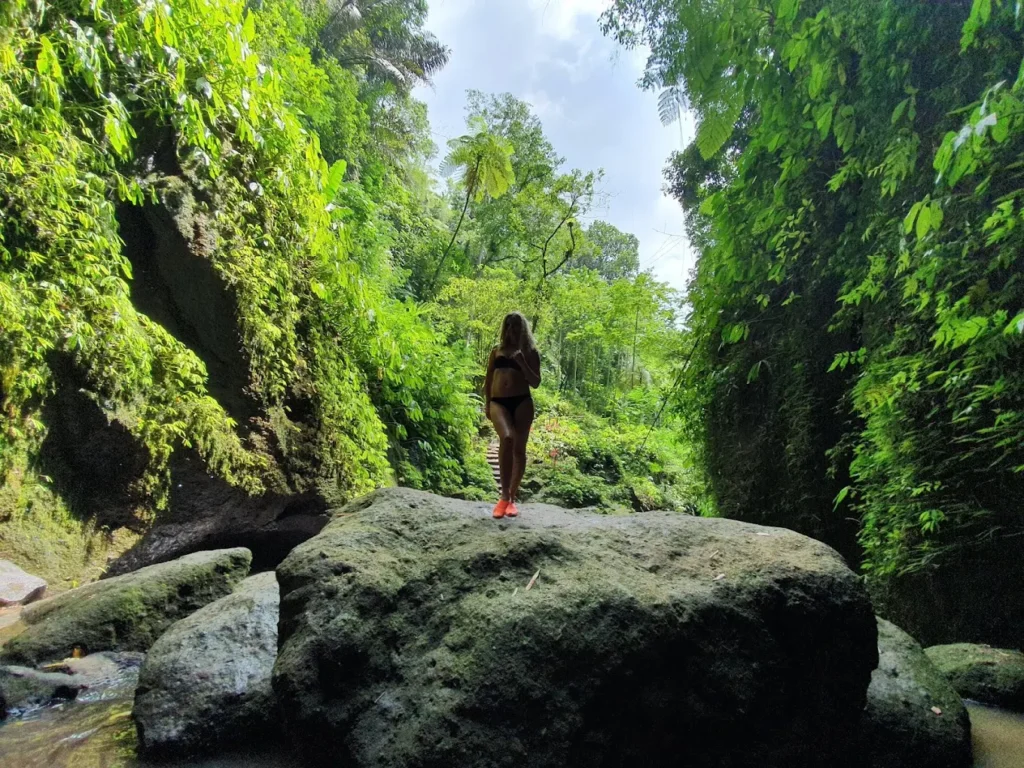
Behind the main cascade is a naturally formed rock alcove carved into the base of the cliff. You can wade through the pool and step behind the curtain of rushing water for a completely different view of the falls.
Don’t expect a deep cave disappearing into the mountain. It’s more of a wide, shallow overhang, with moss-covered rock walls and tropical vegetation thriving in the constant spray. The rocks can be extremely slippery, so take care when making your way across.


Leke Leke isn’t the only waterfall worth visiting in this part of Bali. If you have a private driver or are staying locally for a few days, these are some of the best waterfalls which are relatively easy to reach.
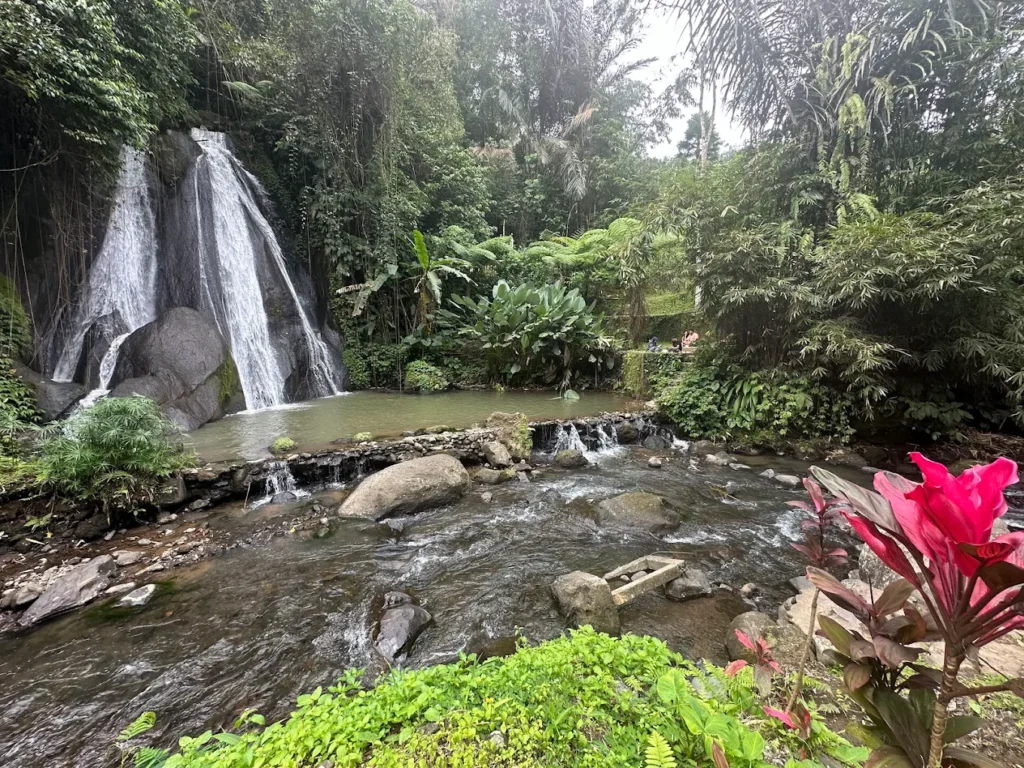
Around 15–20 minutes away, Campuhan Antapan is a peaceful alternative to Bali’s more famous waterfalls. Three small streams flow side by side into a calm pool surrounded by greenery, and the short, easy walk makes it a particularly straightforward stop to add to your day.
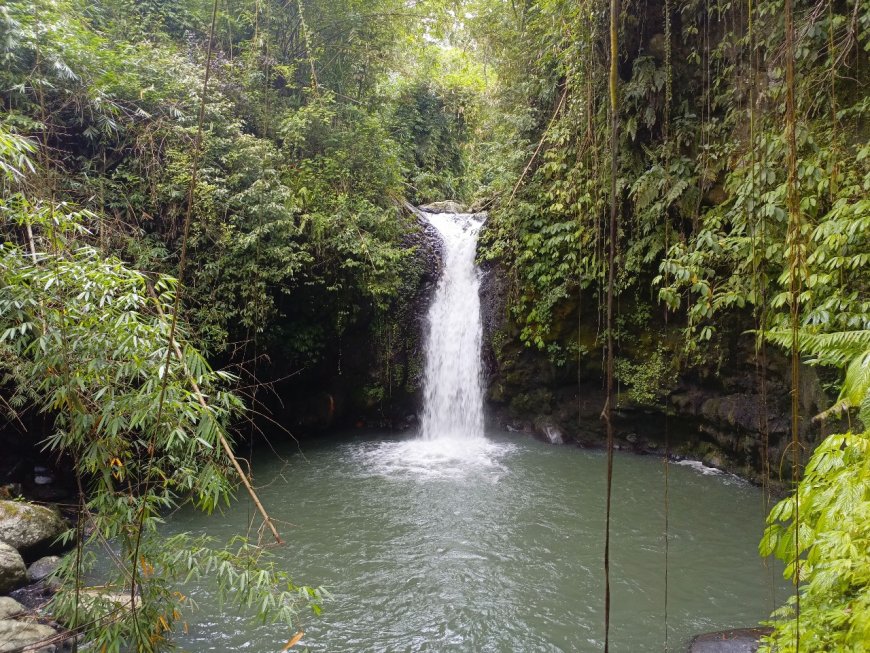
Also around 15–20 minutes away, Besikalung Waterfall is a much less touristy spot hidden among jungle and rice terraces near the historic Besikalung Temple at the foot of Mount Batukaru. Part of the appeal is the scenic walk through the surrounding countryside on the way there.
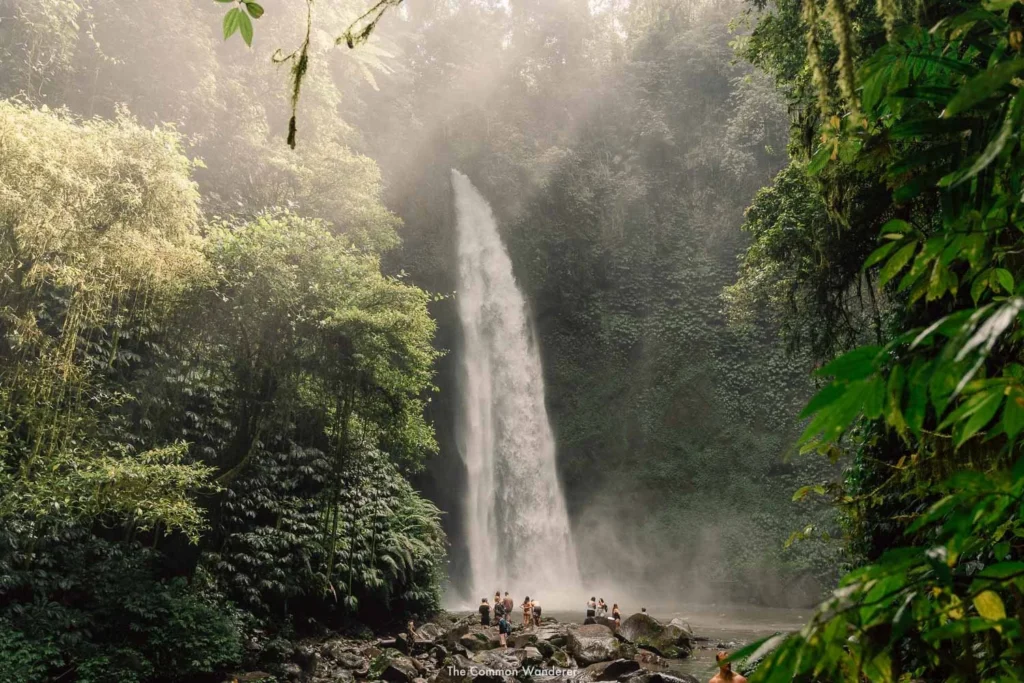
Around 30–40 minutes from Leke Leke, Nungnung is considerably more powerful and among Bali’s tallest waterfalls. Reaching it requires descending roughly 500 steep steps, followed, unfortunately, by climbing them all again, but the enormous cascade waiting at the bottom makes the effort worthwhile.


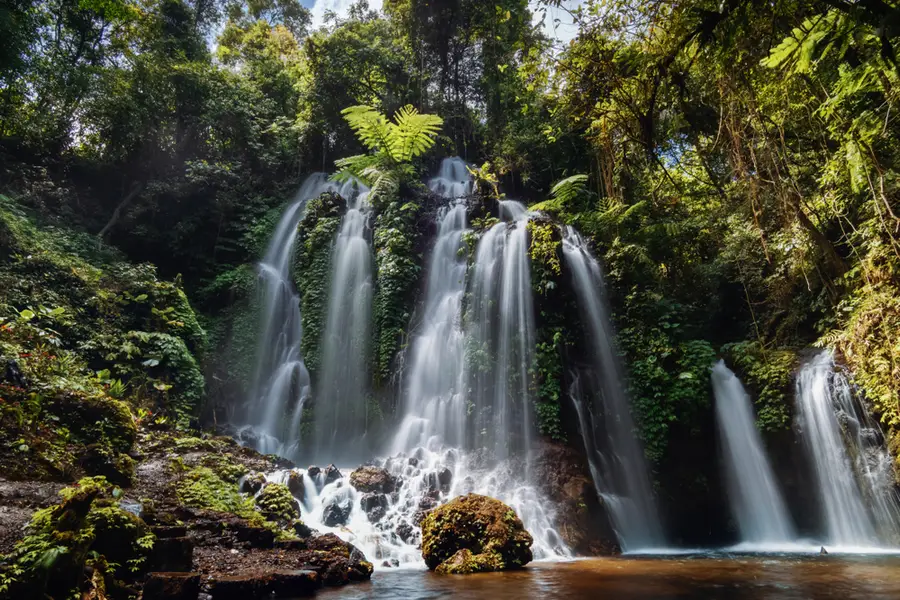
Allow around 30–40 minutes to reach Banyu Wana Amertha, where one entrance ticket gives you access to several different waterfalls within the same lush valley. The gentle, well-maintained jungle paths make exploring relatively easy, while the unusual Spray Waterfall is one of the highlights.
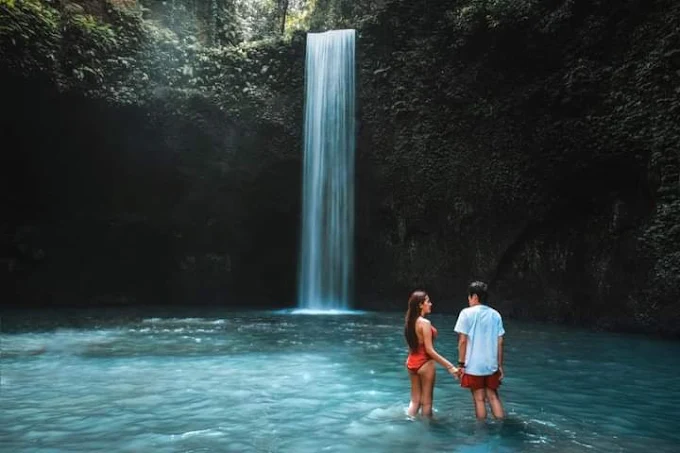
Tibumana is a little further afield, more than an hour’s drive east, but it’s worth considering if you’re continuing towards Ubud. Its almost symmetrical curtain of water drops into a calm swimming pool, reached via an easy 10–15-minute walk along steps and bamboo bridges.

Whether you’re visiting Leke Leke or some other Bali waterfalls, a little preparation can make your visit considerably easier, particularly during the wet season. Here are a few things worth knowing before you head down to the falls.



As with everywhere in Bali, this area is spoilt for choice when it comes to food. Expect everything from local warungs to modern gastro joints and coffee with a view.
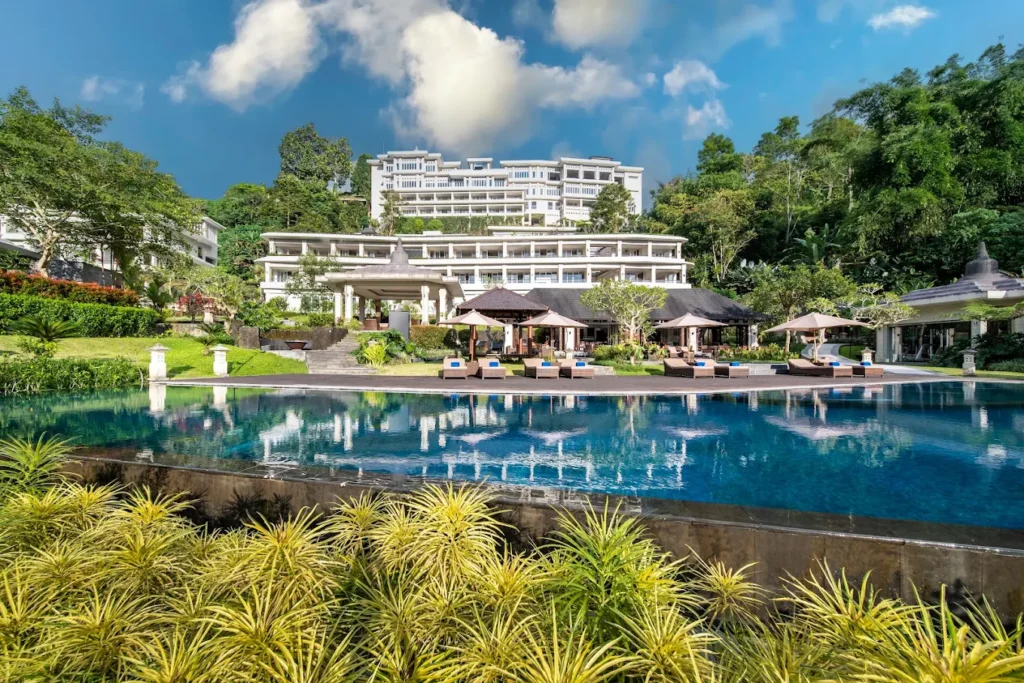
It might be a bit out of the way, but there is no shortage of hotels and villas in the area if you decide to stay for a night or more.
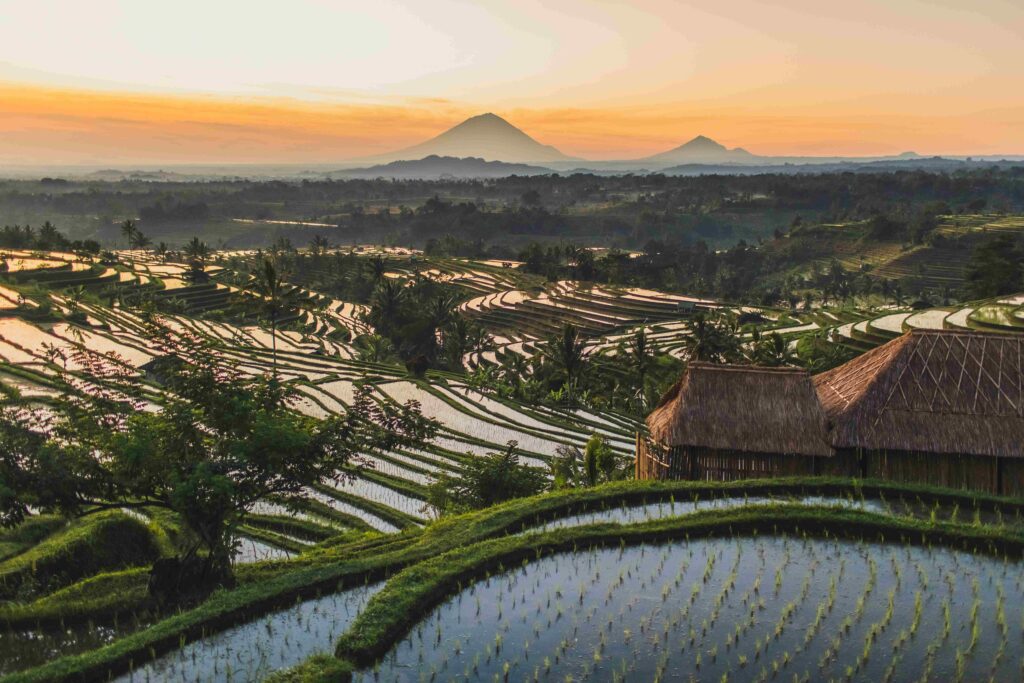
There’s plenty more to explore once you’ve seen the falls, particularly if you’re staying overnight rather than rushing back south. From rice terraces and temples to mountain lakes and sunrise hikes, this part of Bali deserves a little extra time.
Absolutely. Leke Leke is one of Bali’s most beautiful waterfalls and an amazing place to visit, combining an easy jungle adventure with a bamboo bridge, a relaxing swimming pool and impressive single-stream cascade, all surrounded by Bali’s natural beauty.
It’s far enough from the busiest tourist areas to feel like an escape, while there’s plenty nearby to make the journey worthwhile.
There isn’t a reliable official step count for Leke Leke Waterfall. The trail includes stairs alongside sloping and sometimes narrow paths, and the walk generally takes around 10–15 minutes each way. Remember, whatever you walk down, you’ll need to walk back up again.


The entrance fee is currently around IDR 50,000 per person. Optional attractions such as the Leke Leke Swing cost extra, so bring some cash and check the latest prices at the ticket booth when you arrive.
For most people with reasonable fitness, the hike is relatively easy to moderate and takes only around 10–15 minutes each way. There are stairs and some steeper sections, however, and the trail can become muddy and slippery after heavy rain, so decent footwear is recommended.
Unfortunately, Leke Leke Waterfall isn’t particularly accessible for wheelchair users or people with significant mobility difficulties. Reaching the falls involves stairs, slopes and uneven jungle paths, with no step-free route to the main waterfall. Anyone who is unsure about managing the trail should consider their mobility carefully before visiting.
Leke Leke Waterfall is well worth adding to your Bali itinerary, combining a beautiful jungle walk with one of the island’s most picturesque waterfalls.
It may take a little more effort to reach than some of Bali’s better-known attractions, but that’s part of the appeal. With plenty of great places to stay nearby, it also makes a good stepping stone for exploring Bedugul, the surrounding lakes, rice terraces and other waterfalls.
Take your time, stay a night or two if you can, and enjoy a quieter side of Bali.
FINNS Holidays is all about holidays in Bali, and tens of thousands of people visit Bali every year without a single issue. In fact, many
Planning a short Bali itinerary? 5 days may not seem like a lot, but there’s plenty of time to enjoy the beaches of Canggu, temples of Ubud and more.

Looking for the best breakfast Bali has to offer? Discover 24 top cafes for everything from smoothie bowls and coffee to big breakfasts and brunch.

Worried about tomcats? Bali has them, but our guide to understanding these rove beetles covers their toxin, burns, treatment and how to avoid them.
Pay Safely With Us