

Let’s Talk Travel Insurance For Bali: Everything You Need To Know
FINNS Holidays is all about holidays in Bali, and tens of thousands of people visit Bali every year without a single issue. In fact, many
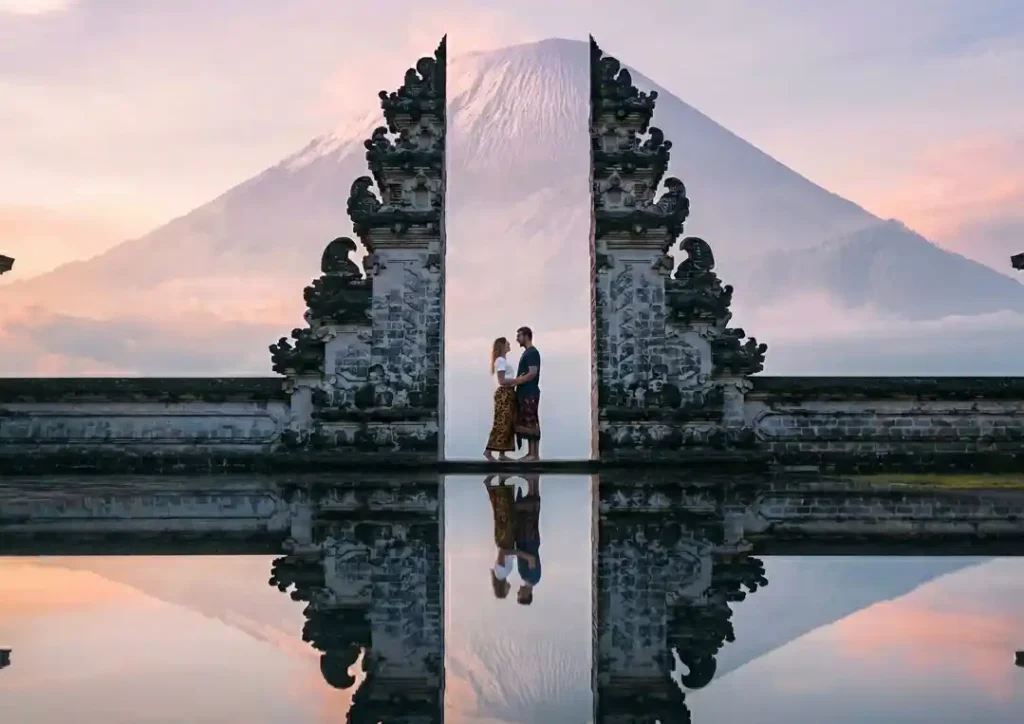
Lempuyang Temple is one of the most famous temples in Bali, known worldwide for its iconic “Gates of Heaven” overlooking Mount Agung. This sacred temple complex attracts both worshippers and tourists, from photographers chasing the perfect sunrise shot to visitors interested in Balinese culture and history.
While many people visit for the famous photo spot, there is much more to Lempuyang than just social media pictures. The wider complex is one of Bali’s most important Hindu sites, with several temples spread across the mountainside and incredible views across the surrounding landscape.
In this guide, we’ll cover everything you need to know before visiting Lempuyang Temple, including entrance fees, the best time to visit, what to expect, and nearby places to eat, stay, and explore in East Bali.
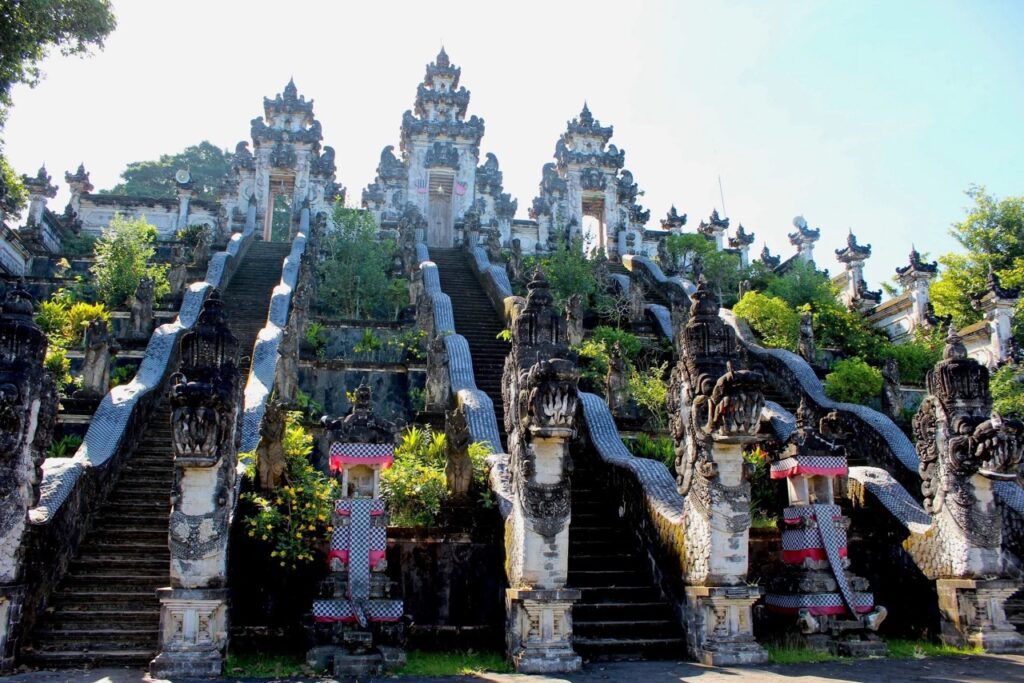
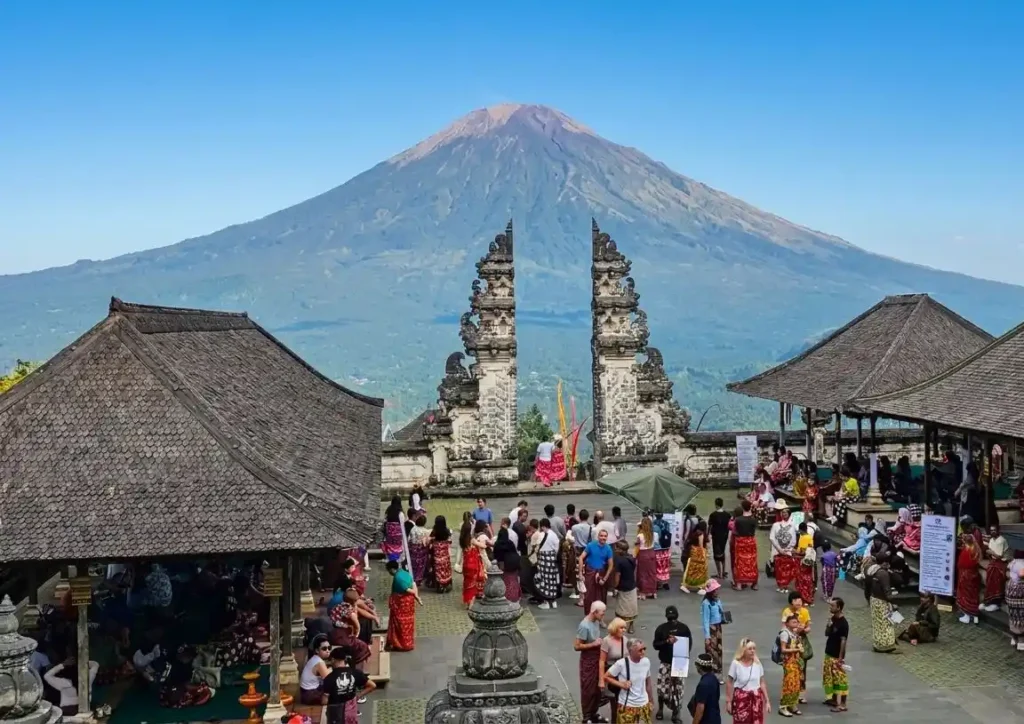
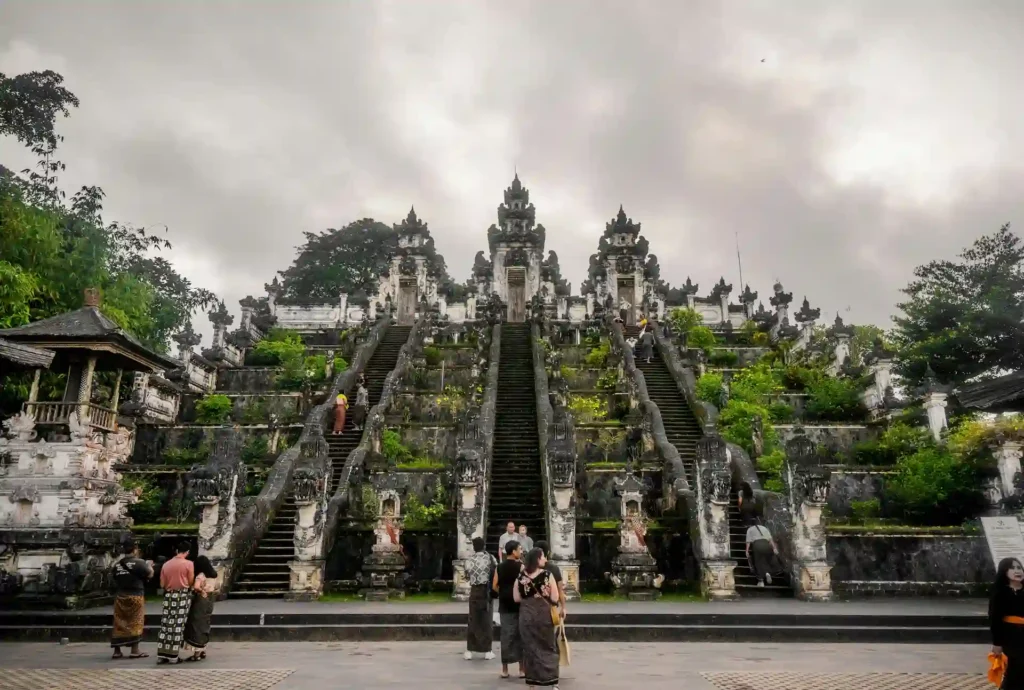
One thing that can confuse visitors is that “Lempuyang Temple” is not just one single temple. It is actually a large sacred complex made up of several temples spread across Mount Lempuyang.
Different names are often used depending on which part of the complex people are referring to. For example, Pura Penataran Agung Lempuyang is the famous lower temple with the “Gates of Heaven”, while Pura Lempuyang Luhur is the highest and holiest temple further up the mountain.
The names can also vary between local Balinese naming, Indonesian naming, Google Maps listings, and English travel articles. This is why Google Maps can appear confusing, with multiple similarly named temples scattered around the same area.
Most visitors simply call the whole complex “Lempuyang Temple” or “Gates of Heaven”, even though technically these can refer to different parts of the sacred site.
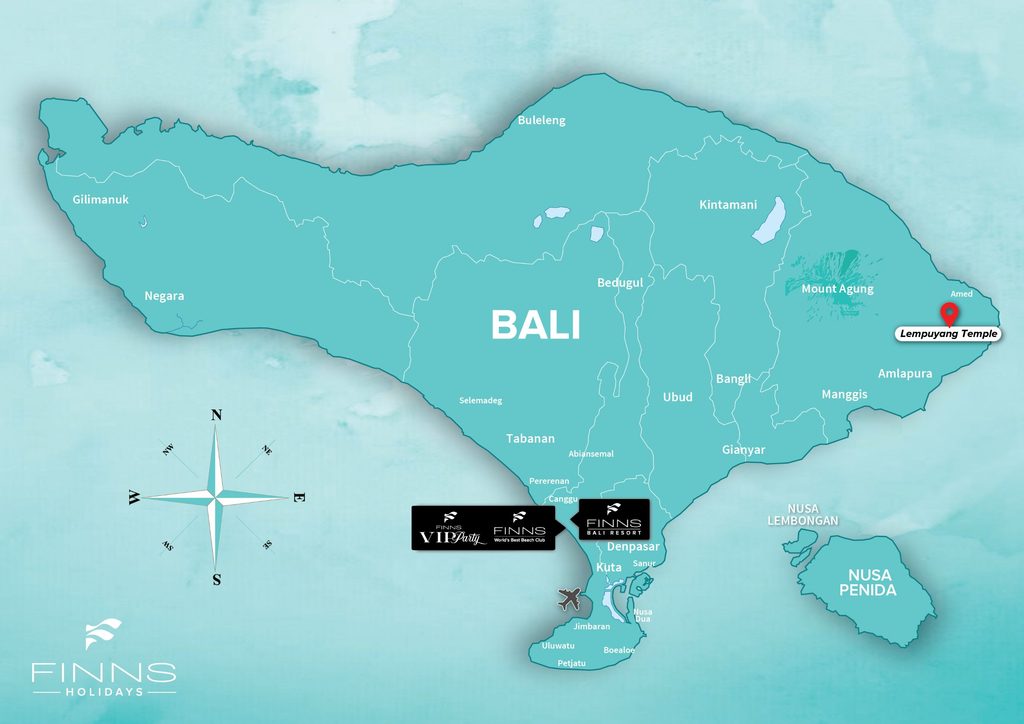
Lempuyang Temple is located in East Bali on the slopes of Mount Lempuyang, in Karangasem Regency. The complex sits high up in the hills above the surrounding coastline, with some parts reaching over 1,000 metres above sea level.
It is around 70 km from Ubud, which usually takes about two hours by car depending on traffic. From Canggu or Seminyak, expect the journey to take around two and a half to three hours.
The nearest main tourist areas are Candidasa and Amed.


Address: Jl. Pura Telaga Mas Lempuyang, Tri Buana, Kec. Abang, Kabupaten Karangasem, Bali 80852, Indonesia
As with anywhere in Bali, getting to Lempuyang Temple mostly depends on where you are staying and what your plans are afterwards. The temple complex is located in a fairly remote part of East Bali, reached via steep winding mountain roads.
Yes. The total cost for visiting Lempuyang Temple is usually around 150,000 to 170,000 IDR per international adult, though prices can occasionally change over time.
A standard breakdown includes:
If you use one of the local photographers at the Gates of Heaven for the famous mirror-effect photos, a small donation or tip of around 10,000 to 20,000 IDR is generally appreciated.
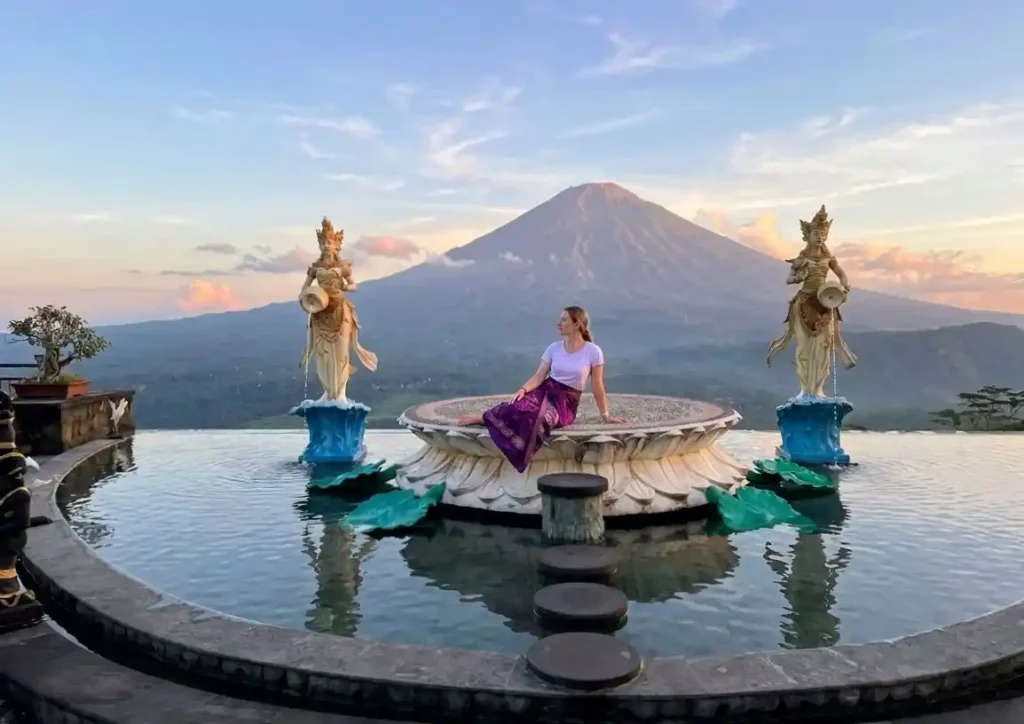
The best time to visit Lempuyang Temple is usually early in the morning, especially if you want clearer views of Mount Agung and shorter queues at the Gate of Heaven photo spot.
By mid-morning, the temple can become very busy with tourists, particularly during Bali’s peak holiday seasons. Arriving early also means cooler temperatures and a more peaceful atmosphere around the temple area.
Late afternoon can also be a good time to visit, especially if you prefer quieter surroundings and softer light for photos. However, cloud cover around Mount Agung is often more common later in the day.


In terms of time of year, the dry season, between April and October is generally the most popular time to visit. You are more likely to get clear mountain views and sunny weather, though this also means larger crowds and longer queues around the famous gate.
During the rainy season, from roughly November to March, the surrounding hills and scenery can look especially green and atmospheric. However, clouds, rain, and mist are more common, meaning Mt. Agung is not always visible.
If possible, try to avoid weekends, Indonesian public holidays, and major peak season periods, as queues for photos at the gate can become very long.
Opening Times: 7.00 AM to 5.00 PM for visitors (24 hours for worshippers)
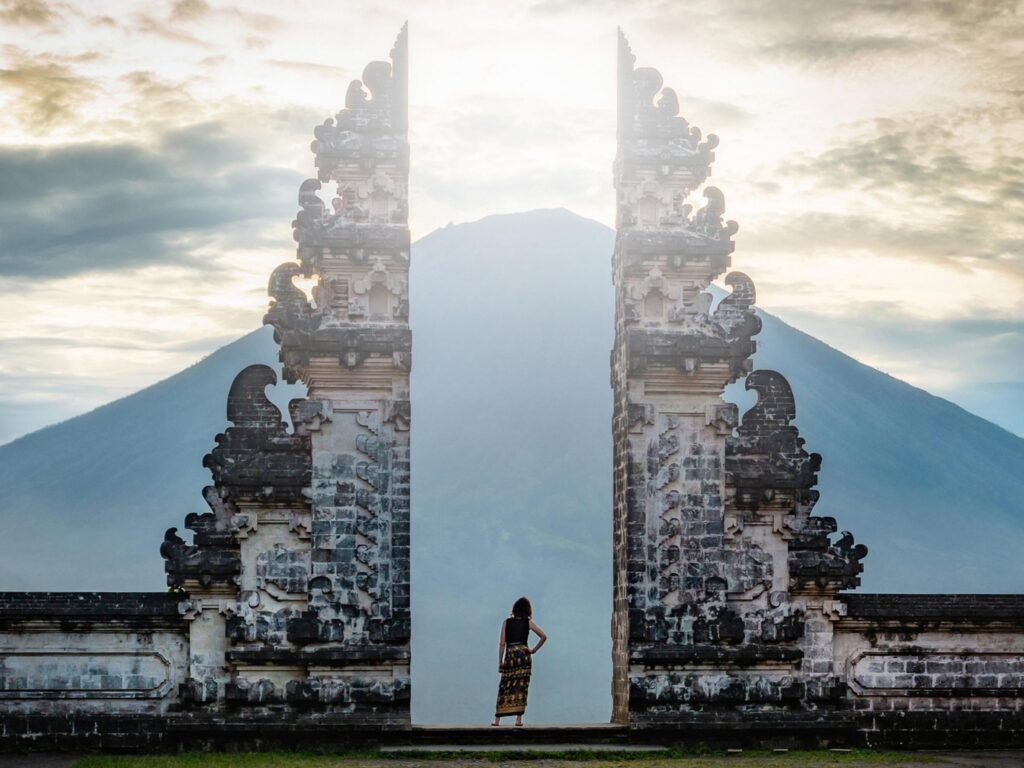
The temple sits high on the slopes of Mount Lempuyang, surrounded by breathtaking scenery, forest, and views stretching out towards Mount Agung and the coastline below.
While the Gates of Heaven are the main attraction for many visitors, the wider complex has a much calmer and more spiritual atmosphere away from the main photo areas. Expect steep stairways, mountain roads, cool air compared to the south of Bali, and plenty of walking between different sections of the temple.
Depending on the time of day, you may also encounter queues for photos, local worshippers making offerings, wandering monkeys, and changing weather conditions moving across the mountains.
One thing many visitors do not realise before arriving is that the Lempuyang Temple complex is spread across several different levels up the mountain.
The lower areas are the busiest and easiest to access, including the famous Gates of Heaven at Pura Penataran Agung Lempuyang. Further up the mountain are quieter temples, including Pura Lempuyang Luhur, which is considered the holiest part of the complex.
Reaching some of the upper temples involves climbing long stairways and steep paths through the mountainside. Many visitors only explore the lower temple area, while others continue higher for the views and more peaceful atmosphere.
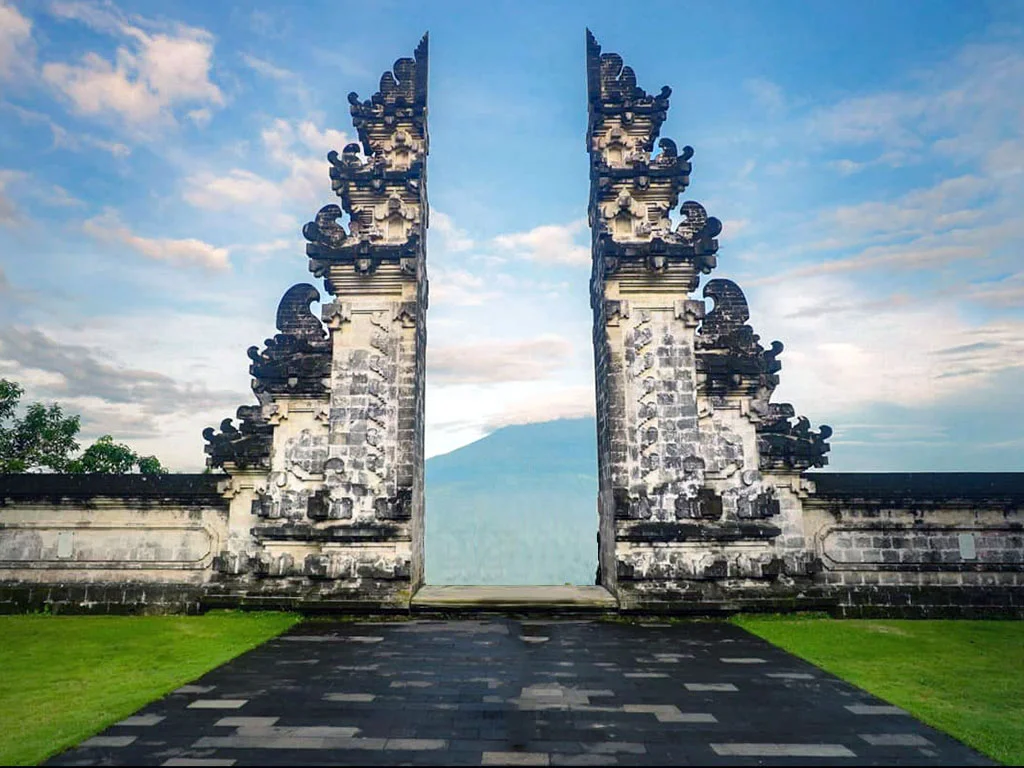
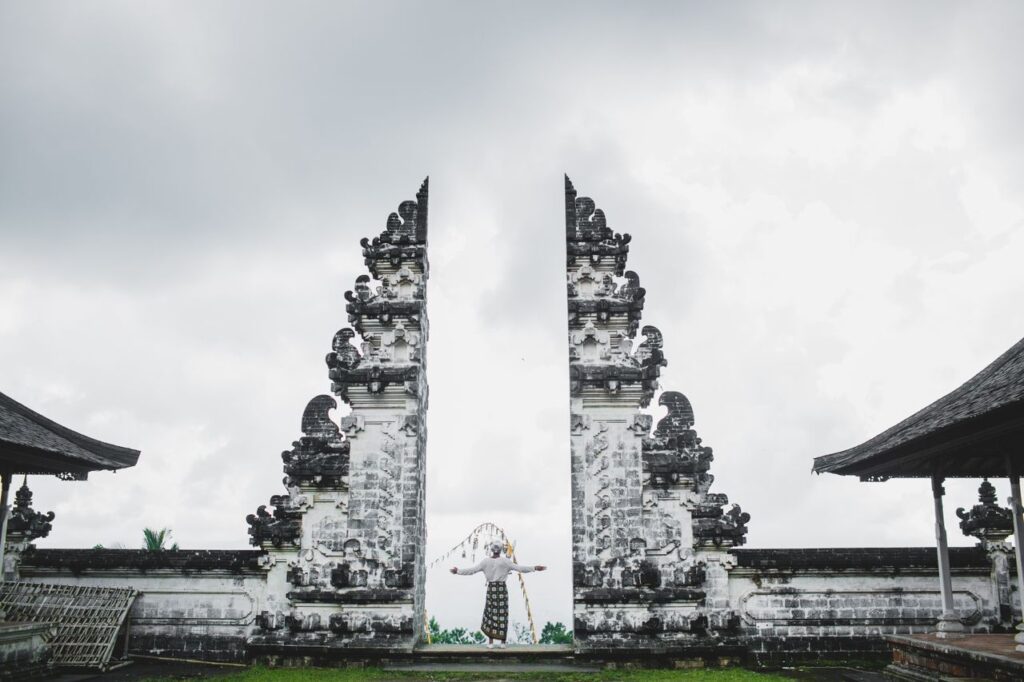
The famous Gate of Heaven is the most photographed part of Lempuyang Temple. The white painted candi bentar, split gate frames the mighty Mount Agung in the background, creating one of the most iconic views in Bali.
Visitors usually queue for photos here, particularly during the dry season and peak tourist periods. The well-known reflection effect seen on social media is created using a small mirror held beneath the camera by local photographers, rather than an actual pool of water. This mirror trick is common knowledge now, and you’ll see people doing it at the gates.


Even if you are not interested in taking photos yourself, the setting around the gate is still impressive, especially on clear mornings when the mountain is fully visible.
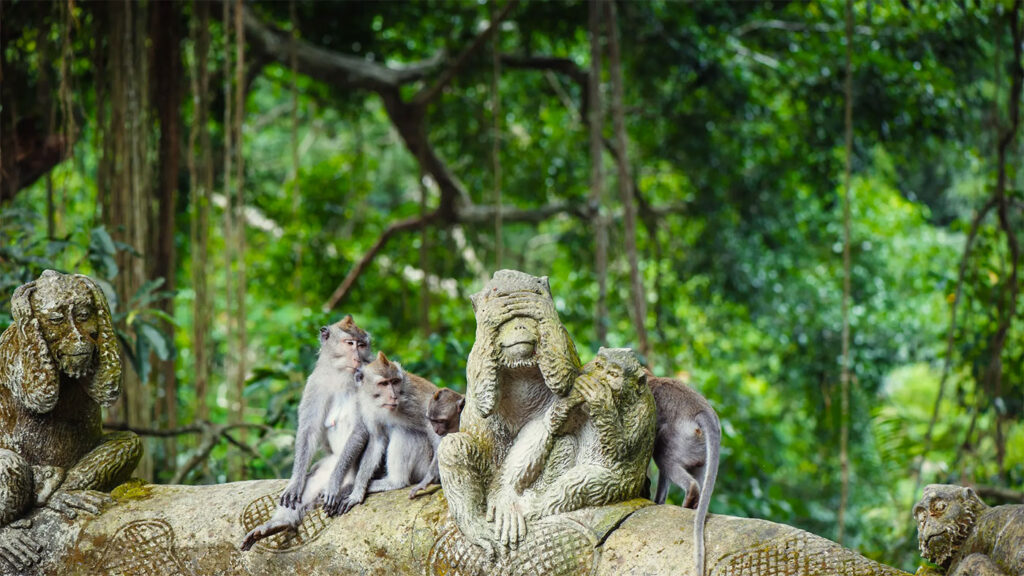
Like many temples in Bali, Lempuyang has its fair share of monkeys, and some of them can be fairly notorious around the stairways and viewing areas.
Most will ignore you completely, but others are very interested in anything easy to grab, especially sunglasses, phones, snacks, and plastic bags. If you are carrying food or loose items, keep them close and stay aware of your surroundings.
Compared to places like Uluwatu Temple, the monkeys here are usually less aggressive, though they are still clever enough to catch distracted visitors off guard.
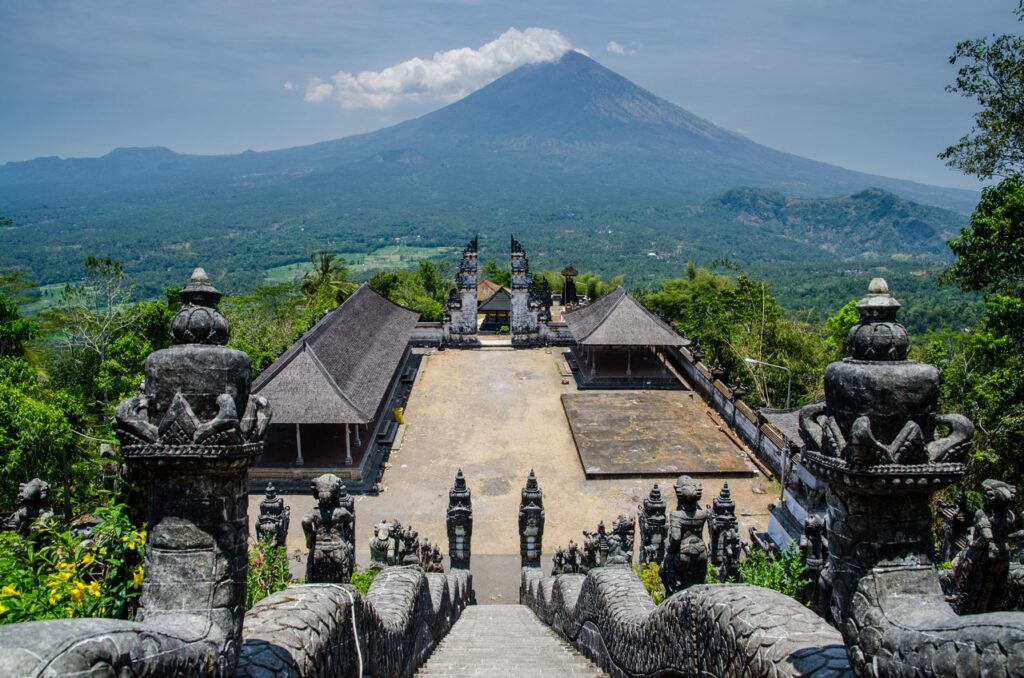
While many tourists know Lempuyang Temple for its famous “Gates of Heaven” photo spot, there is far more to this sacred mountain site than social media pictures. In fact, Pura Lempuyang is one of the oldest and most important temples in Bali, and remains an active place of worship for Balinese Hindus today.
Rather than being a single temple, it is an entire complex made up of seven temples connected by stairways and mountain paths across the slopes of Mount Lempuyang. Many visitors only explore the lower sections, though the upper temples are considered some of the holiest places within the sacred area.
The most visited section is Pura Penataran Agung Lempuyang, home to the heaven gate. Further up the mountain is Lempuyang Luhur Temple, considered the highest temple and main temple within the complex.
Reaching the upper areas involves climbing long stairways through the forested mountainside, which is one reason many people describe visiting Lempuyang as a spiritual journey as well as a sightseeing experience. The stairs leading up are flanked by dragions, protectors of the temple.
Some upper areas and outer sanctum spaces may be reserved for worshippers during ceremonies, and visitors will notice offerings and other sacred objects throughout the site, which should always be treated respectfully.
Lempuyang is also considered one of Bali’s Pura Sad Kahyangan, or key temples, the six holiest places on the island, believed to spiritually protect Bali and its people according to Balinese Hindu philosophy.
Today, the site attracts visitors from around the world, though it remains an important sacred place for local worshippers and ceremonies.
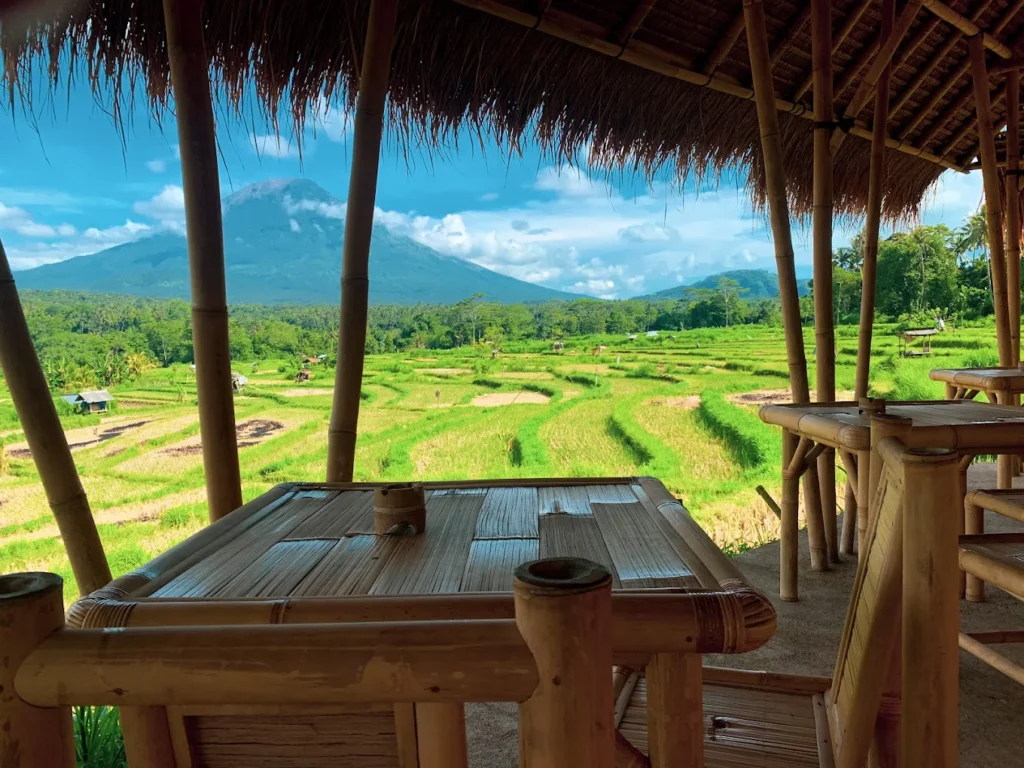
Ouf course, no day out is complete without stopping for a feed, and there are a few places right near the temple.
Taman Lempuyang View – Restaurant and viewpoint spot with wide views across the surrounding hills and coastline. A good place to stop for food, drinks, and photos.
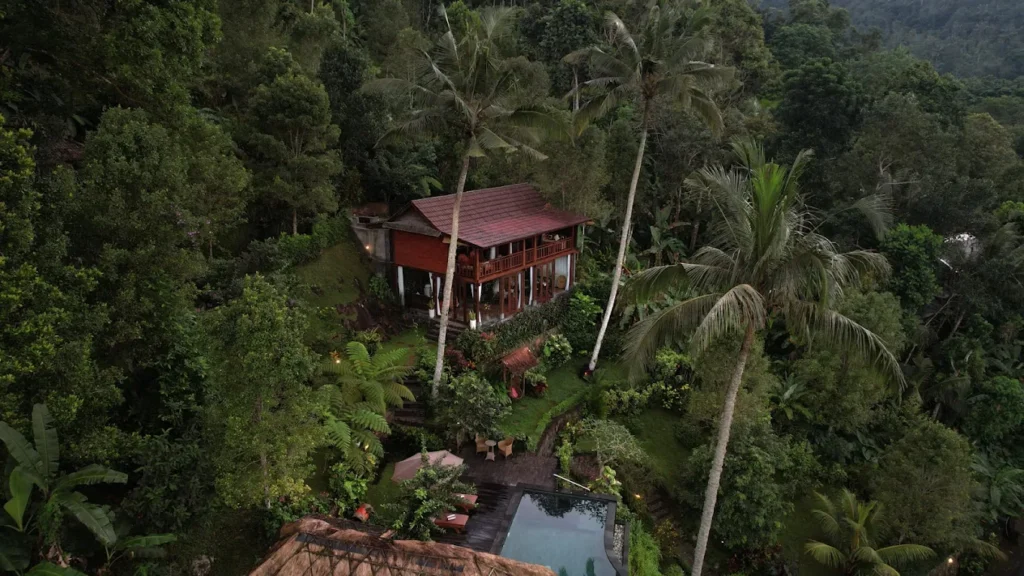
If you’re staying for a night of two before heading to the coast, there’s a range of villas and guesthouses, mostly in the village back down the mountain slopes. You might like it and stay two weeks or more!
Whether you’re staying in the area for a few days or just making a full-day trip of the region, there’s plenty to see nearby. From water palaces and viewpoints to diving spots and coastal villages, this part of the island has a completely different feel to the busy south.
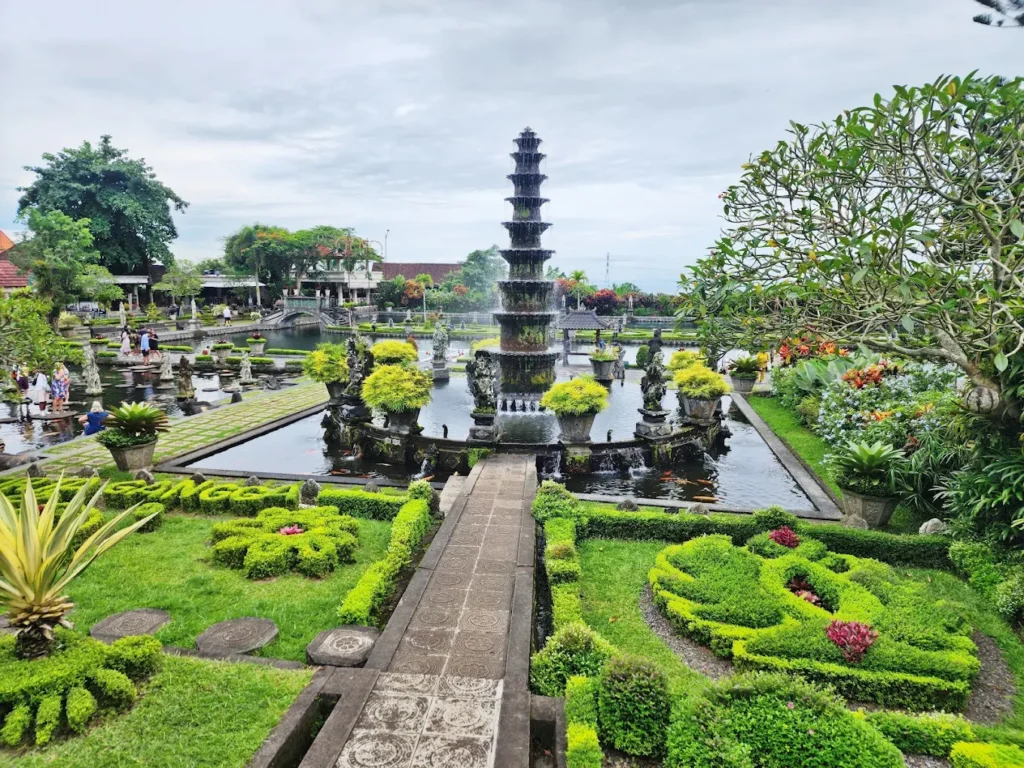
One of the most popular nearby attractions, Tirta Gangga is a former royal water palace known for its fountains, koi ponds, stepping stones, and tropical gardens. It is located around 20 to 30 minutes from Lempuyang Temple and is often high on people’s East Bali bucket list.
It’s a nice place to slow down for an hour or two after the winding roads around Lempuyang, with plenty of shaded walkways, photo spots, and small cafes nearby.
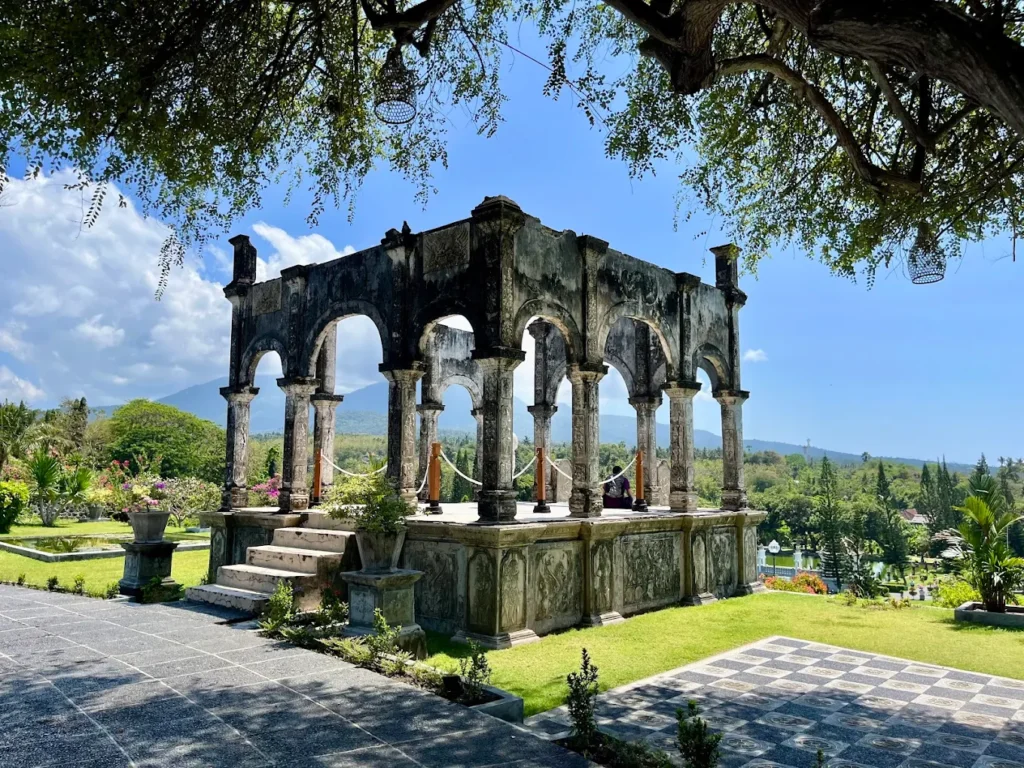
Also known as Taman Soekasada Ujung, this former royal palace complex features large pools, historic buildings, bridges, and walking paths with views towards the coastline and surrounding hills.
Compared to Tirta Gangga, it usually feels quieter and more open, making it a good place for a relaxed walk and a few photos without huge crowds. There are also some breathtaking views out towards the sea on clear days.
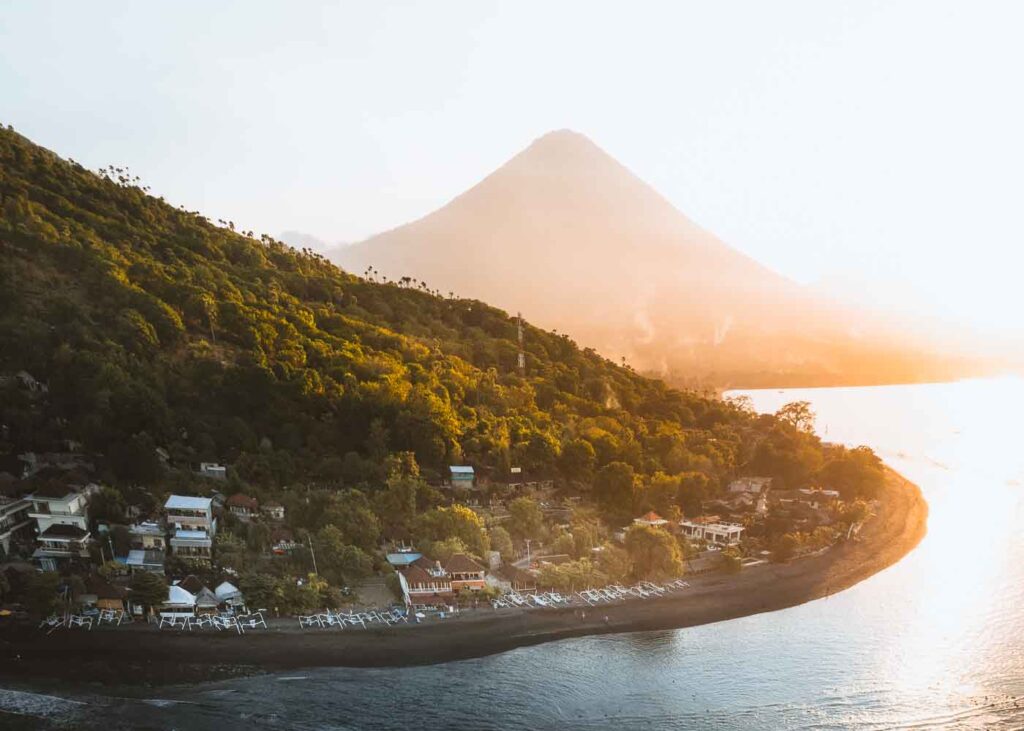
Located along Bali’s northeast coastline, Amed is known for its relaxed atmosphere, black sand beaches, fishing villages, and excellent diving and snorkelling spots.
Rather than being one single beach, Amed is actually a stretch of coastal villages, each with its own small beaches and bays. Areas like Jemeluk Bay are especially popular for snorkelling, with clear water, coral reefs, and colourful marine life close to shore.
Amed is also one of the best diving areas in Bali. Nearby dive sites include the famous USAT Liberty Shipwreck in Tulamben, as well as coral walls, reef gardens, and underwater temples scattered along the coastline.
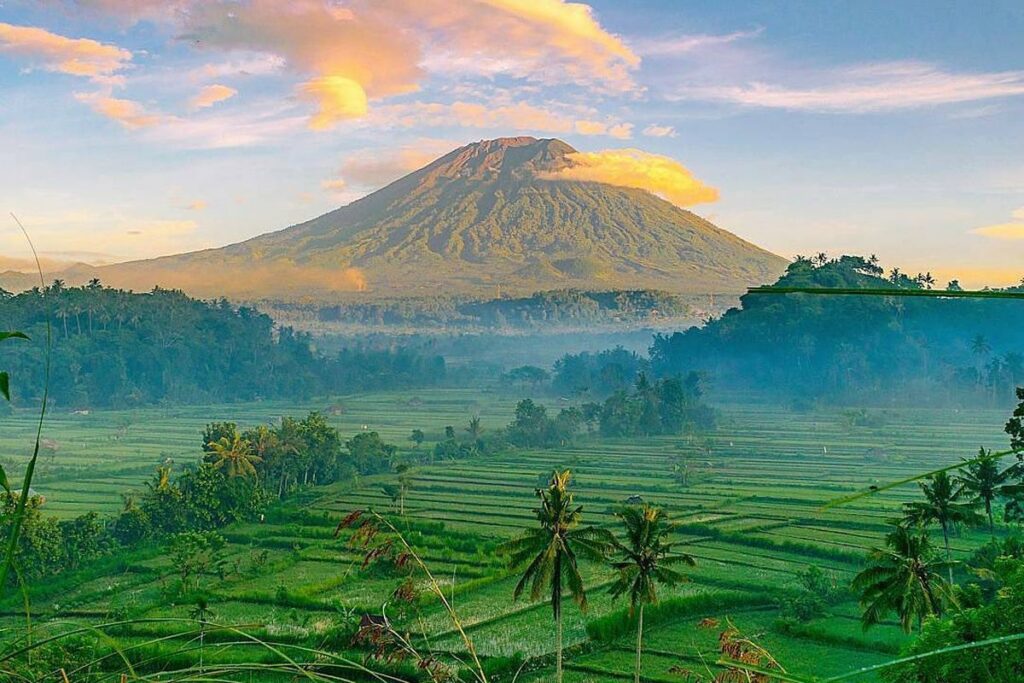
Bukit Cinta, or “Love Hill”, is one of the best viewpoints in the area for seeing Mount Agung rising above the surrounding countryside.
On clear mornings, the views here can be absolutely stunning, especially when low cloud and mist still sit around the rice fields below. It’s a popular stop for photographers heading towards Lempuyang Temple, particularly around sunrise.
As Lempuyang Temple is an active place of worship and one of the most important temples in Bali, visitors are expected to dress respectfully.
Traditional sarongs are usually included with your entrance ticket and must be worn inside the temple area.
Helpful tip: keep your legs and shoulders covered, not only is it respectful, but it’ll keep the mosquitoes away!
Comfortable footwear is also recommended, as there are plenty of stairs, uneven paths, and uphill walking around the site.
Lempuyang Temple is a Balinese Hindu temple and remains an important active place of worship for local Balinese Hindus today. It is considered one of Bali’s six holiest temples, known as the Sad Kahyangan.
One temple often linked to local legends and “cursed” stories is Goa Lawah Temple, also known as the Bat Cave Temple. Like many sacred places in Bali, stories about spirits, curses, and supernatural protection are part of local folklore and traditional beliefs rather than tourist attractions.
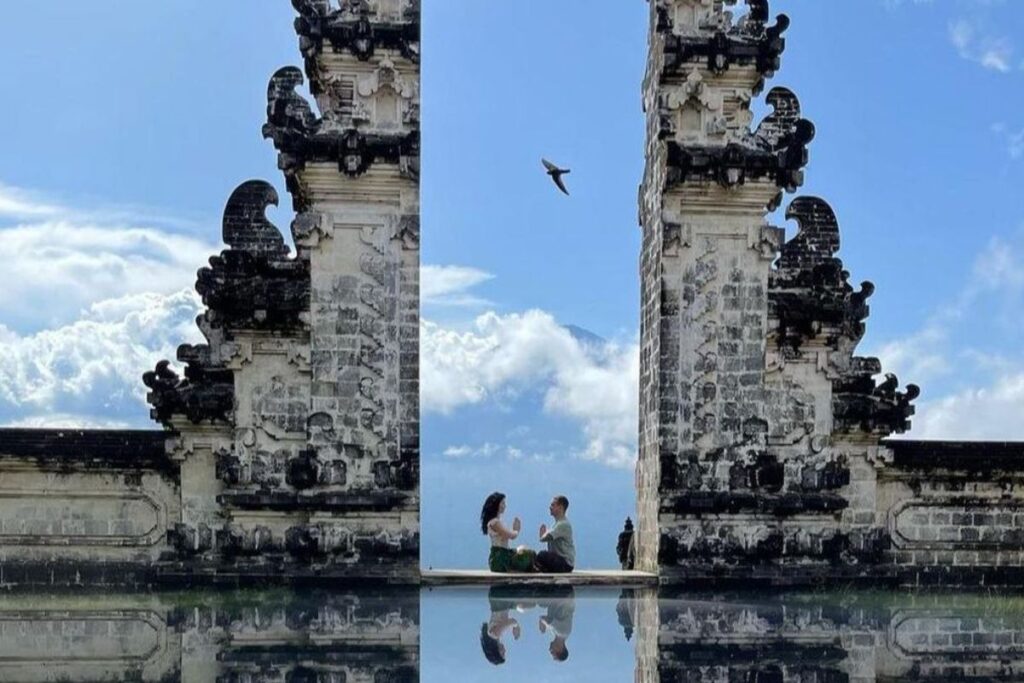
Lempuyang Temple is much more than just a photo spot. While the Gates of Heaven are what bring many people here, the wider complex, mountain scenery, and spiritual atmosphere are what make the experience stand out.
Whether you are visiting as part of a trip through East Bali or making the journey specifically for sunrise at the famous gate, it is well worth setting aside the time to explore this magnificent temple properly.
Just arrive early, expect some queues around the main photo area, and remember that this remains an important sacred site for Balinese Hindus, not just a tourist attraction.
FINNS Holidays is all about holidays in Bali, and tens of thousands of people visit Bali every year without a single issue. In fact, many
Planning a short Bali itinerary? 5 days may not seem like a lot, but there’s plenty of time to enjoy the beaches of Canggu, temples of Ubud and more.

Looking for the best breakfast Bali has to offer? Discover 24 top cafes for everything from smoothie bowls and coffee to big breakfasts and brunch.

Worried about tomcats? Bali has them, but our guide to understanding these rove beetles covers their toxin, burns, treatment and how to avoid them.
Pay Safely With Us