

Let’s Talk Travel Insurance For Bali: Everything You Need To Know
FINNS Holidays is all about holidays in Bali, and tens of thousands of people visit Bali every year without a single issue. In fact, many
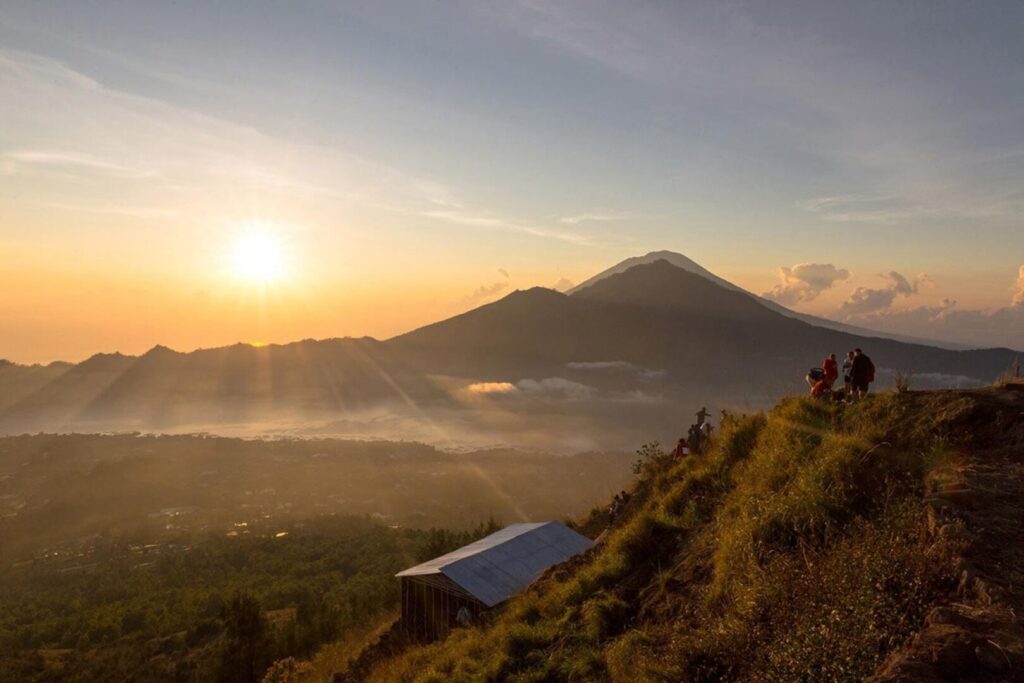
Mount Batur is one of Bali’s most famous natural landmarks and one of the island’s most popular hikes. This active volcano attracts thousands of visitors who make the early morning climb to watch the sunrise from the summit.
The Mount Batur sunrise trek means a very early start, but the panoramic views across the caldera, Lake Batur and surrounding mountains make it well worth getting out of bed for.
In this guide, we’ll cover everything you need to know about climbing Mount Batur, including what to expect, how difficult the hike is, the best time to go and what to bring with you.
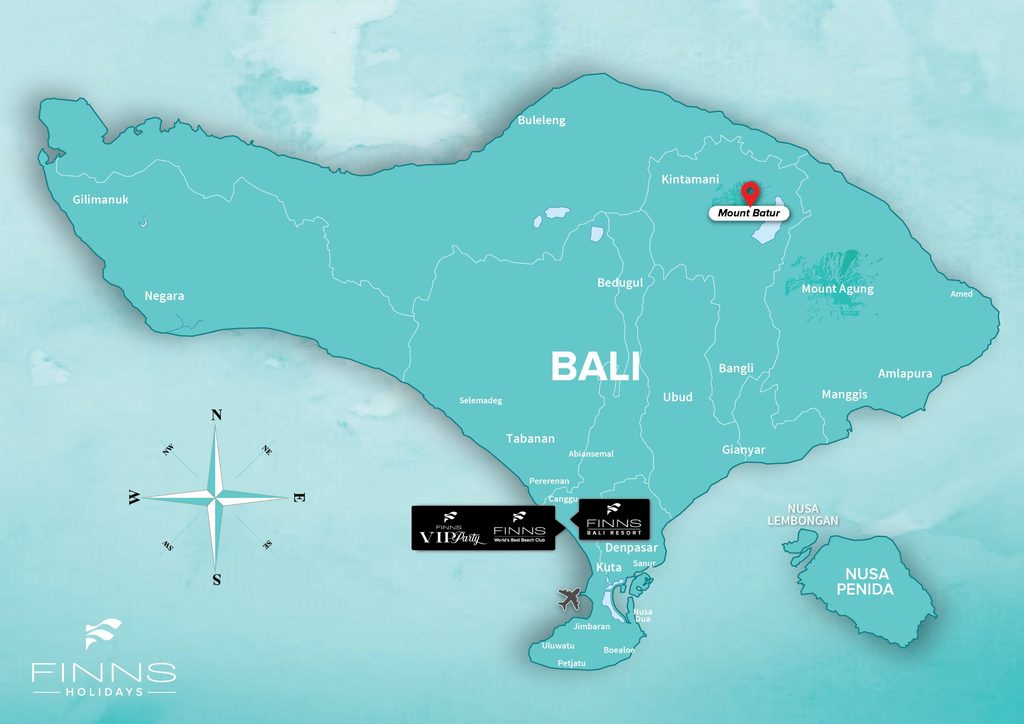
Mount Batur is in northeast Bali, in the Kintamani area of Bangli Regency. Around 40 km north of Ubud.
It’s approximately 70 km from Canggu and Seminyak, with the journey from the main tourist areas of southern Bali usually taking around two hours by car.
Known locally as Gunung Batur, it is an active volcano rising 1,717 metres above sea level. It sits within a much larger volcanic system formed by enormous ancient eruptions, with the present-day volcano rising from inside the Mount Batur Caldera alongside Lake Batur. UNESCO says Batur has erupted at least 22 times between 1804 and 2000.
The wider area is now protected as the Batur UNESCO Global Geopark, recognised for its unusual volcanic geology as well as the communities and Balinese culture that have developed around it.
Mount Batur and Lake Batur have enormous religious and practical importance in Bali. The lake is considered sacred and is traditionally regarded as the ultimate source of the island’s springs and rivers, while Dewi Danu, the goddess associated with the lake and water, is worshipped at Pura Ulun Danu Batur.
This connection goes far beyond religion. Water flowing from the Batur area helps support Bali’s famous subak system, the traditional irrigation network that manages rice fields across the island. Pura Ulun Danu Batur sits at the top of this spiritual water network, linking water, agriculture and Balinese culture in a system that has developed over centuries.
The temple and Lake Batur are now part of Bali’s UNESCO World Heritage-listed Cultural Landscape of Bali Province, recognising the close relationship between the island’s landscape, religion and traditional irrigation system.
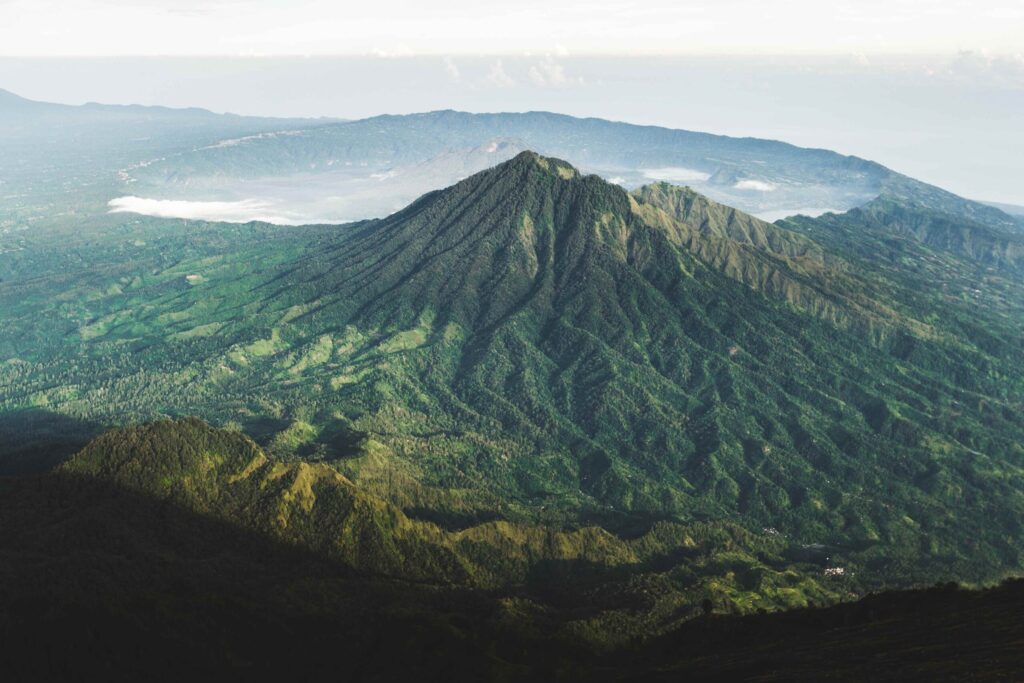
Mount Batur’s eruptions have repeatedly shaped the communities living around it. In 1926, an eruption buried the old village of Batur and Pura Ulun Danu Batur beneath lava, forcing residents to abandon the area. The village and temple were later rebuilt higher up on the caldera rim, overlooking Lake Batur.
Pura Ulun Danu Batur remains one of Bali’s most important water temples and is dedicated principally to the goddess associated with the lake and the island’s water supply. The temple and lake are also components of Bali’s UNESCO World Heritage-listed Subak cultural landscape.


Climbing Mount Batur for sunrise is the main reason most visitors come to the volcano. It means sacrificing a few hours of sleep, hiking in darkness and reaching the summit before dawn, but the experience at the top makes the early start worthwhile.
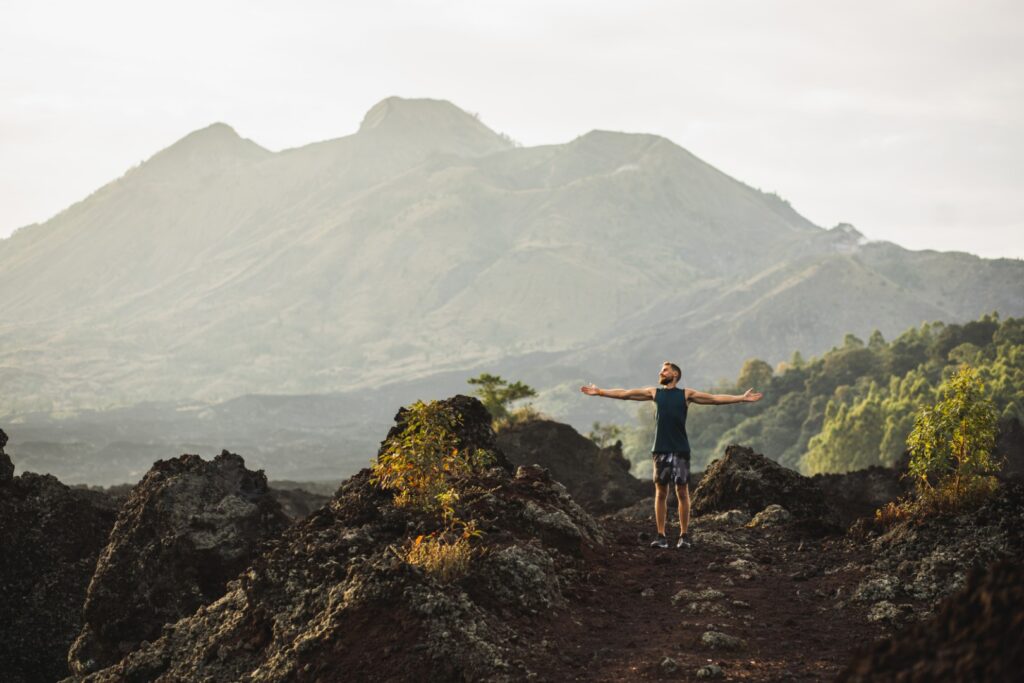
Most Mount Batur sunrise trekking tours begin with a hotel pickup in the middle of the night, often around 2am if you’re staying in southern Bali. You’re usually picked up in a 4×4, so you get an added jeep ride experience on the way there!
You’ll then meet your local guide near the base of the volcano before starting the trek in darkness.
Your guide will usually provide a flashlight, although bringing your own head torch is never a bad idea. The first part of the trail is relatively gentle before the climb gradually becomes steeper.
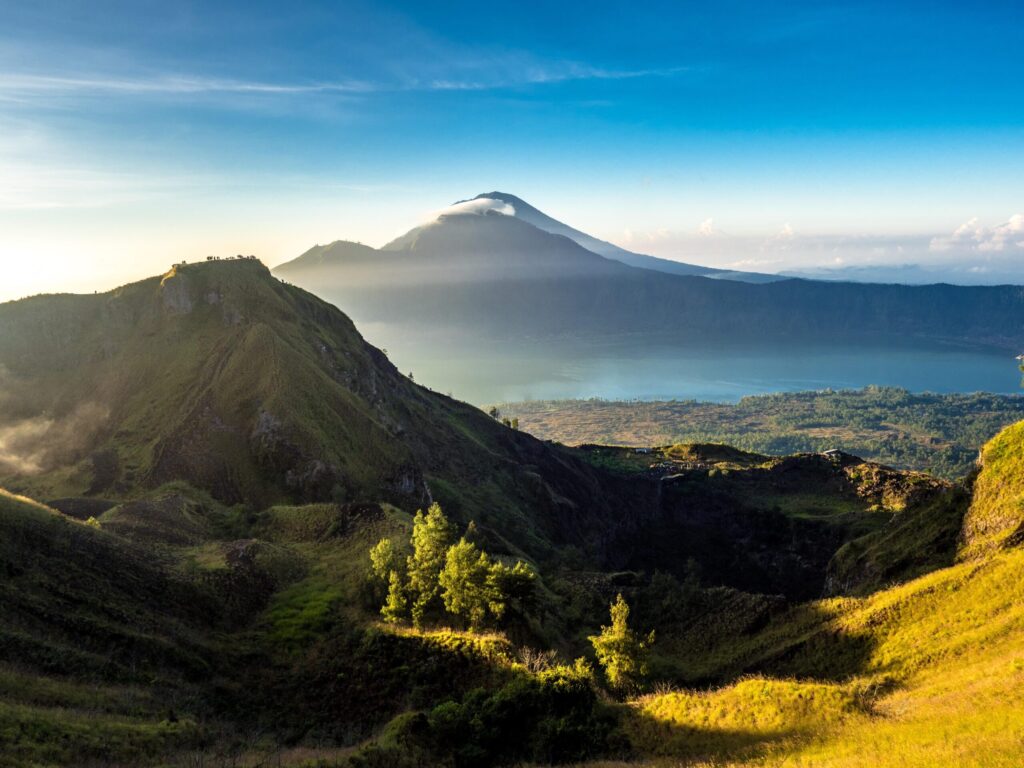
It usually takes around 1.5 to 2 hours to reach the summit of Mount Batur, with the exact time depending on your fitness and how busy the trail is. It’s a popular hike in Bali, so don’t expect to have the mountain entirely to yourself.
The terrain becomes steeper and more uneven towards the top, with loose volcanic rock underfoot in places. Take your time, follow your guide and stop for a breather when you need one. The aim is simple: reach the summit before the first light appears over the horizon.
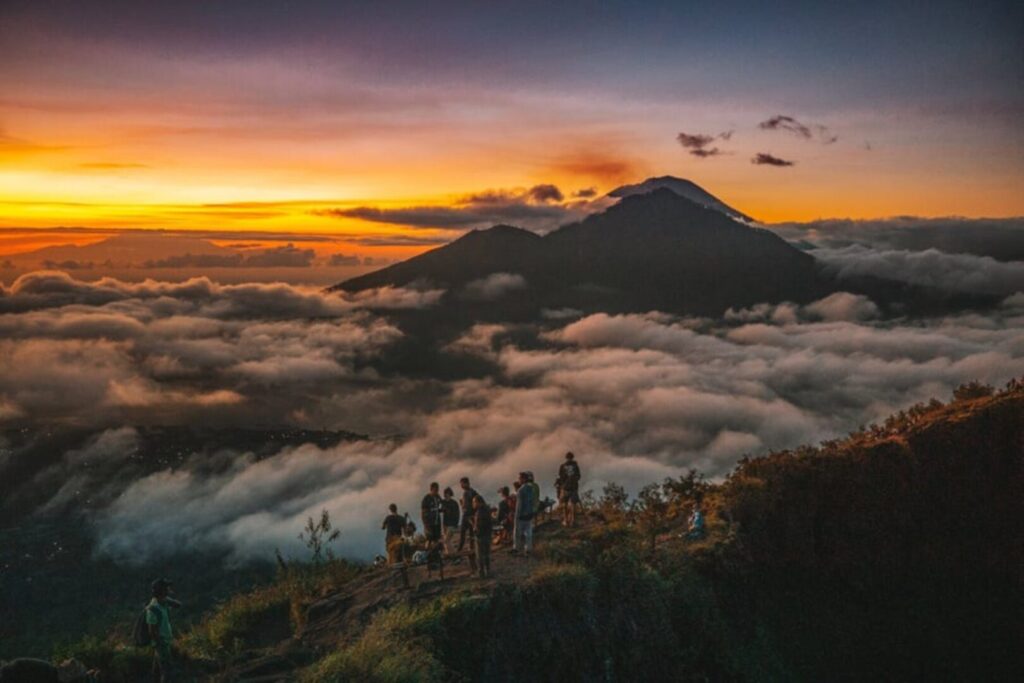
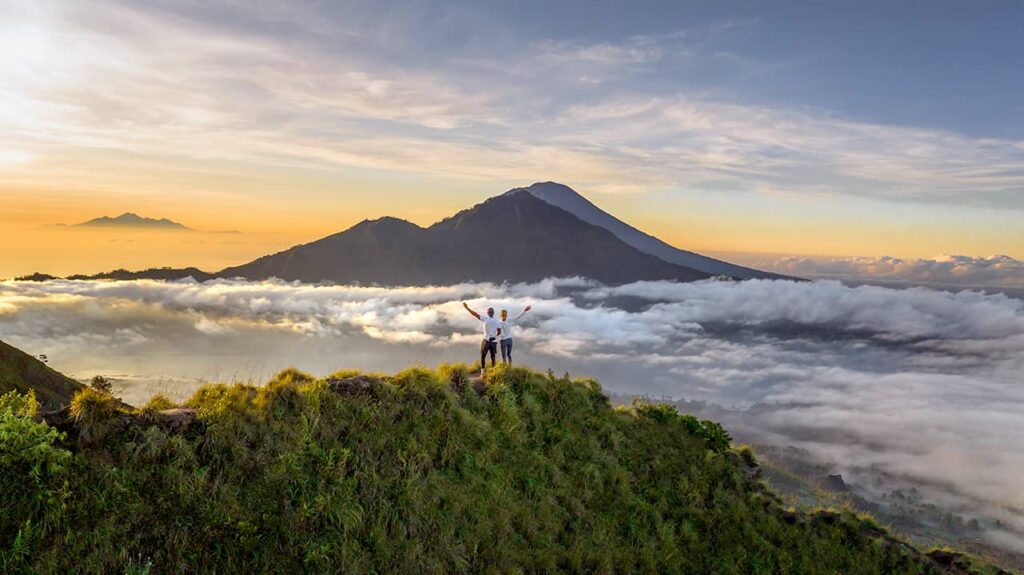
Sunrise from the top of Mount Batur is the reward you’ve been climbing through the darkness for. As the sky brightens, you’ll see Mount Agung and Mount Abang, while good weather can reveal Mount Rinjani across the Lombok Strait. On exceptionally clear mornings, you may even catch a distant glimpse of Mount Raung and Ijen on Java.
The view from the summit also gives you a completely different perspective on Batur’s volcanic history. Looking down, you can see the lake, the black lava field and the area around the original temple site near the lakeshore, bringing some of the eruption history we mentioned earlier into view.


Breakfast at the summit is part of the experience too. Guides commonly prepare a simple breakfast of bread and eggs, with the eggs cooked using heat from the volcano itself, alongside tea or coffee. You’ll also sometimes find vendors who have made the climb carrying cold drinks to sell to hikers.
It can be a little cold up the top, but the guides often have a sweater you can borrow until the sun heats the place.
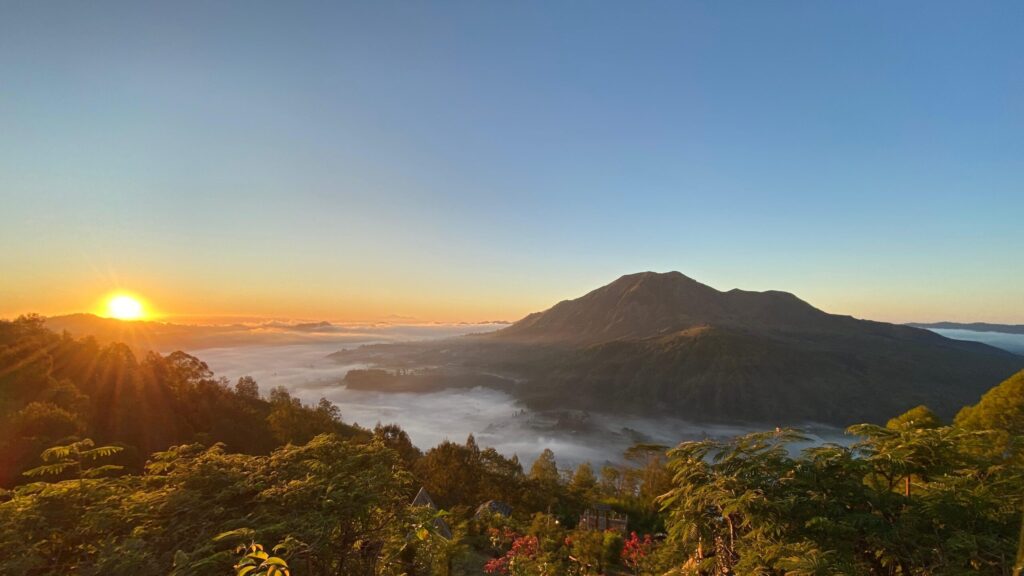
Once the sun is up and you’ve had time to enjoy the panoramic views, it’s time to begin the descent. Coming down is generally quicker, but loose volcanic rock can make some of the steeper sections surprisingly slippery.
Take particular care on the way down. Many hiking accidents happen during descents, when tired legs, fatigue and a natural tendency to relax after reaching the top can lead to slips and falls. Take your time and keep watching your footing, even when the hardest part feels like it’s already behind you.
The big difference is that you can finally see the landscape you climbed through in darkness. You’ll get a much better look at the crater and volcanic terrain on the way down before meeting your driver at the bottom.
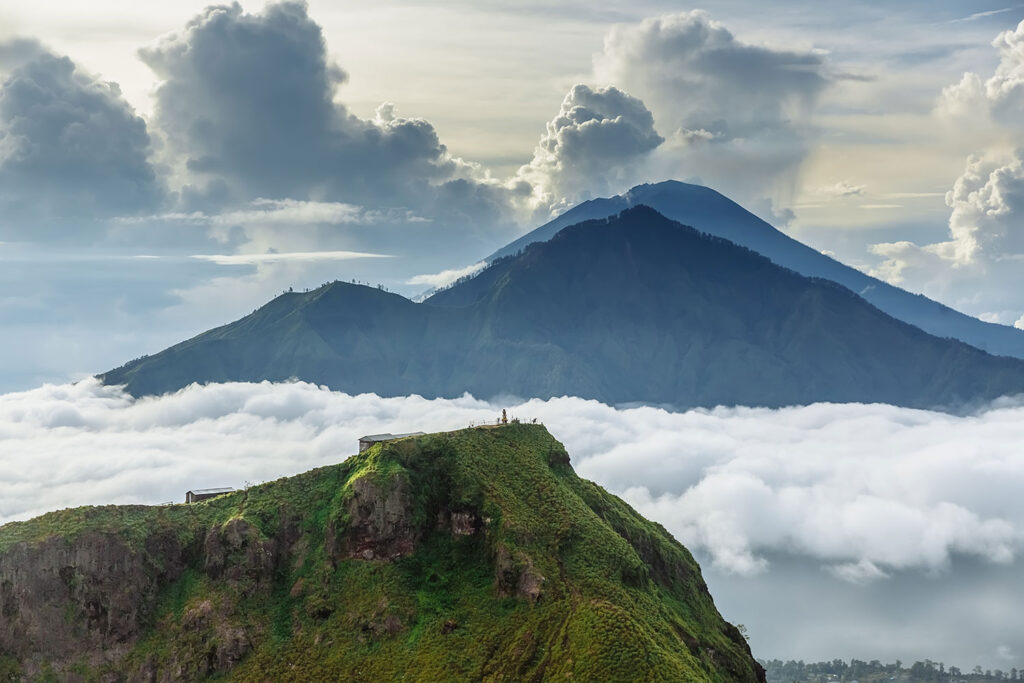
Mount Batur is a moderately challenging but fairly easy hike, but it’s doable for most people with average fitness. The route starts relatively gently before becoming more and more steep, with loose volcanic ground making some sections more difficult.
You don’t need previous hiking experience, but this is still a mountain rather than a casual morning walk. Wear decent footwear, take your time and listen to your guide if you need to stop for a rest.
Well, unless you’ve accidentally booked a sunset trek, the best time of day is pretty obvious: very early morning. The best time of year to climb Mount Batur is generally during Bali’s dry season, from around April to October.
You’re more likely to get good weather and clear views during these months, although conditions on any mountain can change quickly. The rainy season doesn’t make the hike impossible, but cloud, rain and slippery trails can make the experience less enjoyable.
Whatever time of year you’re visiting Bali, check the weather forecast before setting off.
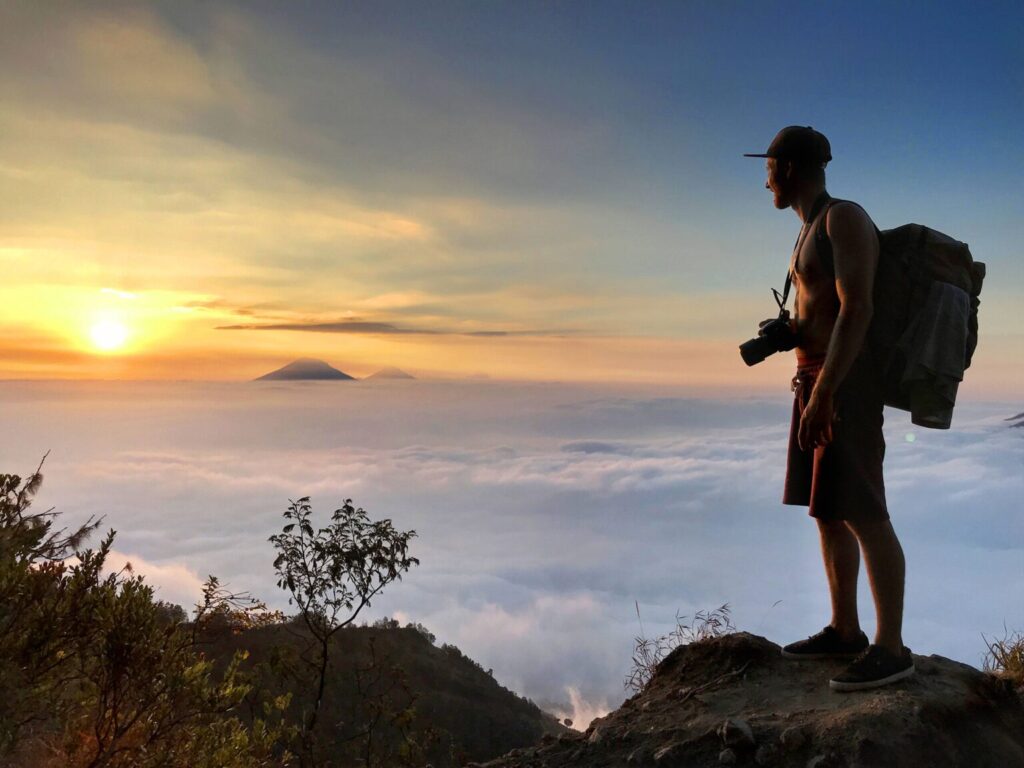
You don’t need loads of specialist hiking gear for Mount Batur, but a few basics will make the early start and climb much more comfortable.


If you’ve booked a private tour, there’s no reason to head straight back after your hike. You could add a few nearby stops on the journey back or even arrange to finish your day trip somewhere else in Bali.
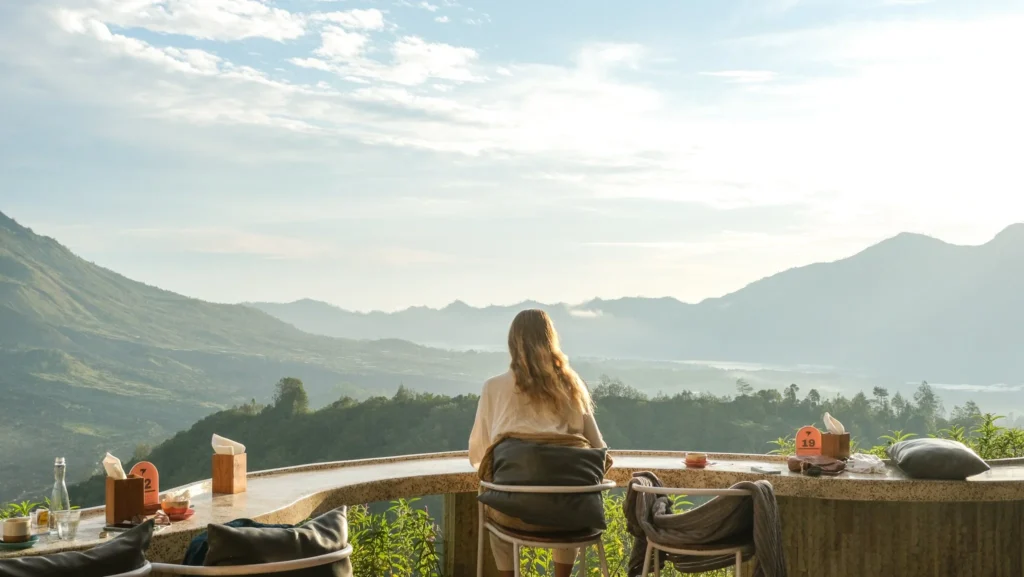
Kintamani has developed a fantastic cafe scene, with many places perched along the higher ground overlooking Mount Batur and the lake.
After getting up in the middle of the night and climbing a volcano, sitting down for a proper breakfast and some locally grown coffee will probably sound pretty appealing.
After seeing the lake from above, head down for a closer look at Bali’s largest crater lake. You can explore the villages along the shoreline, stop at one of the lakeside restaurants or arrange a boat trip across the water.
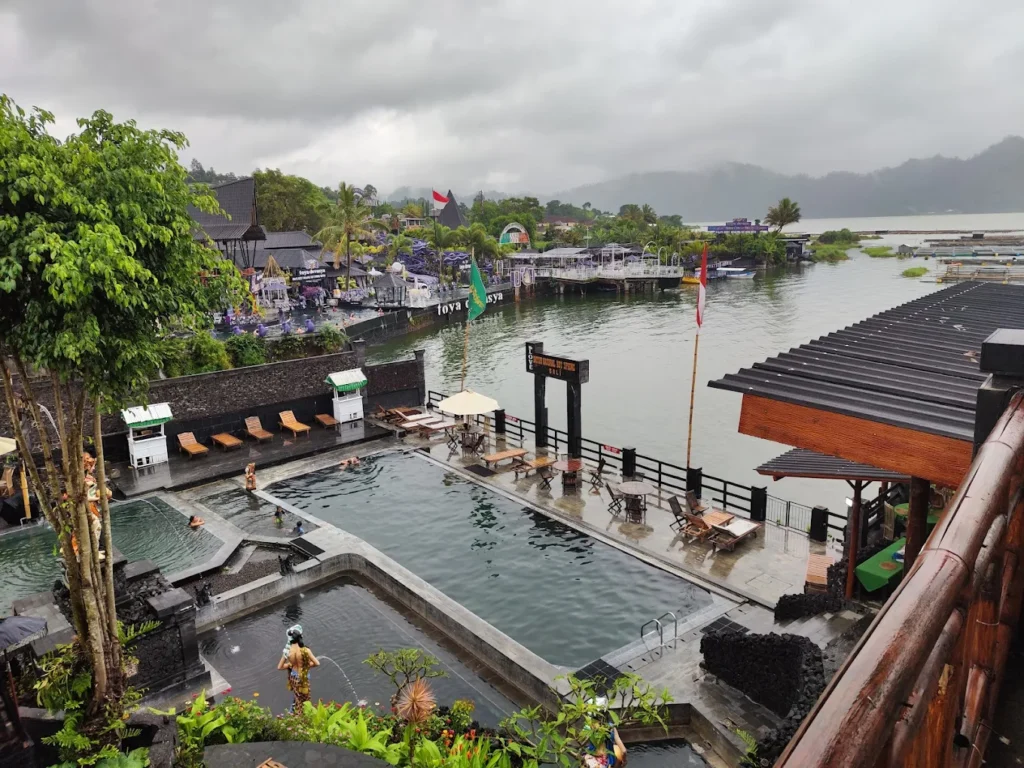
If your legs are complaining after the climb, head down to Toya Bungkah for a soak in the natural hot springs.
The area has several geothermal pools beside the lake, where you can relax in the warm water while looking back towards the volcanic landscape you’ve just spent the morning exploring.
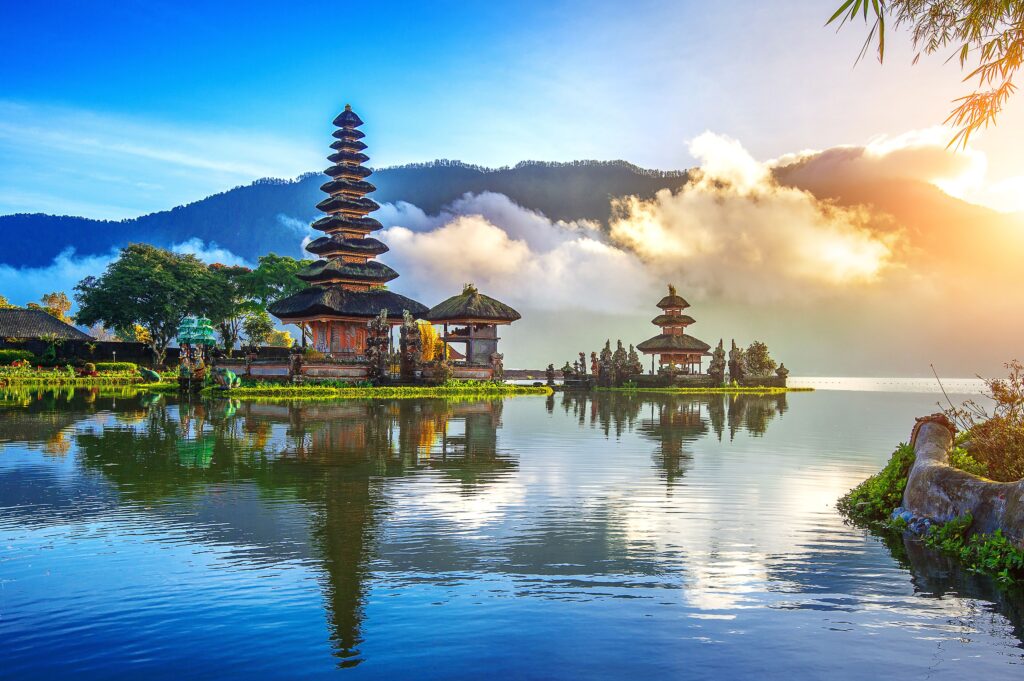
Pura Segara Ulun sits right beside the lake and is sometimes nicknamed the Floating Temple.
When water levels are high, the small Hindu temple can appear almost surrounded by water. It’s a nice bit of cultural immersion while you’re exploring the Batur area and a particularly photogenic one.
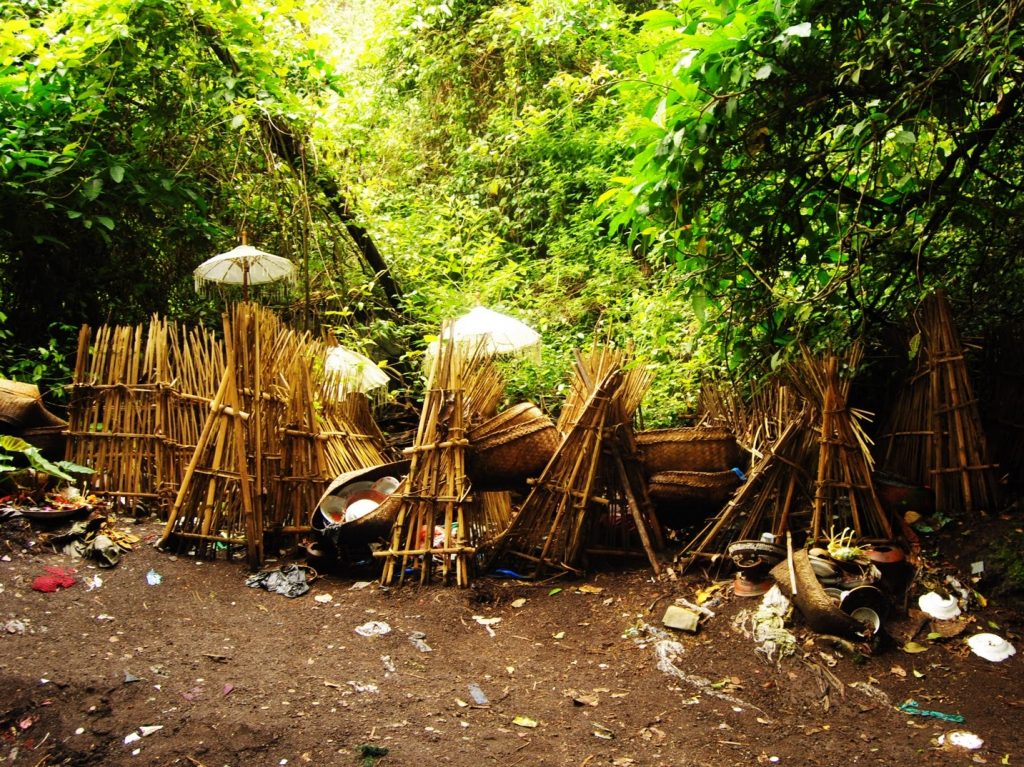
Trunyan lies on the eastern shore of the lake and is home to one of Bali’s most unusual communities. The Bali Aga village is best known for its ancient burial tradition, where some of the dead are laid above ground beneath bamboo structures rather than cremated or buried.
A large local taru menyan tree is traditionally said to prevent the area from being overwhelmed by the smell.
The famous cemetery, sometimes nicknamed Skull Island, is normally reached by boat across the lake. If you’re staying around Batur for a few days, you can also explore the area on foot and trek into the surrounding hills for impressive views across the lake and volcanic landscape.
Whether your legs can handle another trek after climbing the mountain is another story.
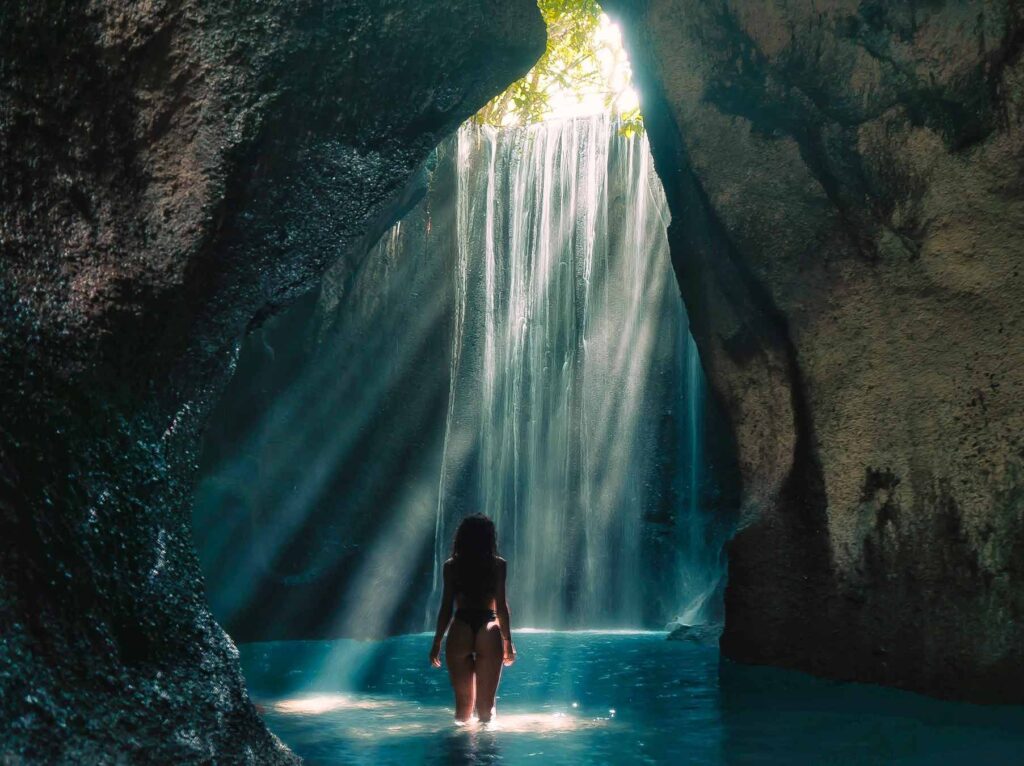
If you’re travelling back towards Ubud or southern Bali, Tukad Cepung Waterfall makes a natural addition to the journey.
The waterfall drops into a narrow rocky canyon, with sunlight sometimes streaming through the opening above. There are steps involved, though, which your legs may have something to say about after Mount Batur.
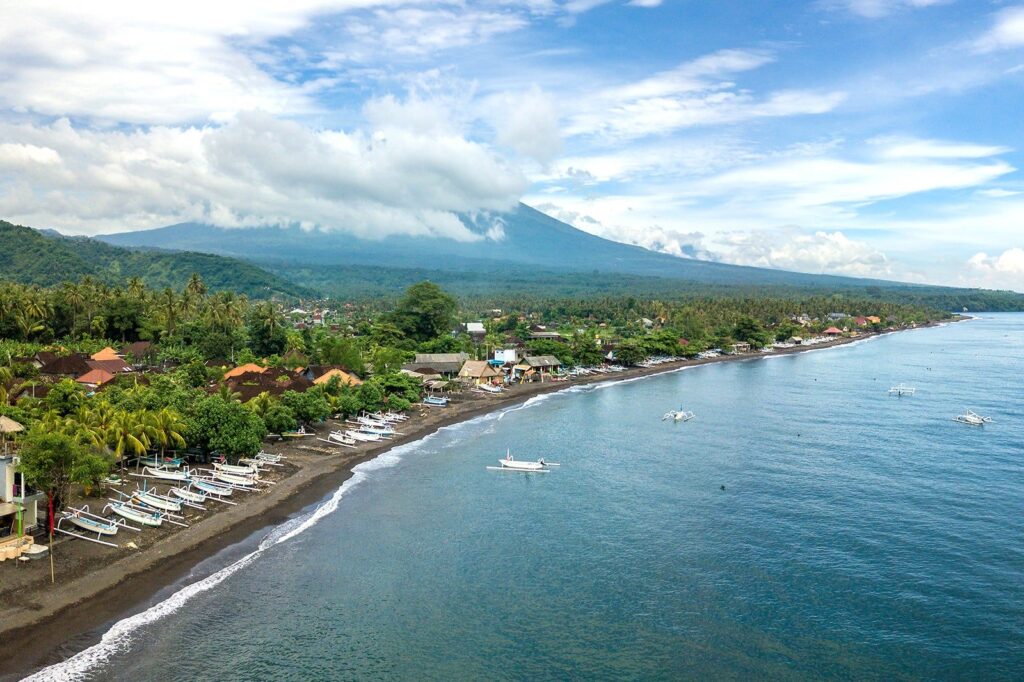
You don’t necessarily have to head south afterwards. Arrange your private tour to continue east, and you can swap the mountains for Bali’s volcanic coastline, where black sand beaches provide a completely different landscape.
You could even arrange to finish your day somewhere on the east coast rather than returning immediately to Canggu or Seminyak.
The Mt Batur hike is moderately difficult, but it’s doable for most people with average fitness. You don’t need any proper hiking experience, although some sections become steeper and more challenging as you approach the top.
It’s challenging enough that you’ll feel it in your legs later, but you certainly don’t need to be an experienced climber.
Most people take around 1.5 to 2 hours to reach the top of Mt Batur, depending on fitness levels, trail conditions and how often you stop along the way.
The descent is generally quicker, although the loose volcanic ground means you’ll still want to take your time.
Mt Batur is an active volcano and has erupted numerous times throughout its history, although predicting exactly when another eruption will occur isn’t possible.
Volcanic activity in Indonesia is closely monitored, and you should always follow current official advice, but the chances are the volcano’s unlikely to erupt.


The mountain combines spectacular sunrise views with the chance to climb an active volcano and explore an important part of Bali’s volcanic landscape.
Its location beside the lake, fascinating eruption history, and significance within Balinese culture make the experience about much more than simply reaching the top.
Batur and Mount Agung are both active volcanoes in Bali, but they’re very different hiking experiences. Mount Batur is lower and considerably easier to climb, making it the more popular choice for a sunrise hike.
Mount Agung is Bali’s highest mountain and requires a longer, much more challenging climb. You can also see Mount Agung clearly from Batur in good weather.
Technically, yes. The trail isn’t particularly difficult to follow, but climbing without a guide isn’t something we’d recommend.
Access to the mountain is managed locally, and independent hikers have reported problems including pressure to hire a guide, disputed checkpoint fees, parking issues and occasionally confrontational encounters.
Booking through organised tour companies avoids these problems and includes transport there and back. You’ll also have a local guide who knows the mountain, the safest route and the stories behind what you’re seeing. Do it the right way and enjoy the experience.
Mount Batur is one of Bali’s most memorable adventures, and watching the sunrise from the summit makes the early start and climb well worth the effort.
With incredible views, a fascinating volcanic history and plenty more to explore nearby, a Mount Batur sunrise hike is a great addition to any Bali trip.
FINNS Holidays is all about holidays in Bali, and tens of thousands of people visit Bali every year without a single issue. In fact, many
Planning a short Bali itinerary? 5 days may not seem like a lot, but there’s plenty of time to enjoy the beaches of Canggu, temples of Ubud and more.

Looking for the best breakfast Bali has to offer? Discover 24 top cafes for everything from smoothie bowls and coffee to big breakfasts and brunch.

Worried about tomcats? Bali has them, but our guide to understanding these rove beetles covers their toxin, burns, treatment and how to avoid them.
Pay Safely With Us